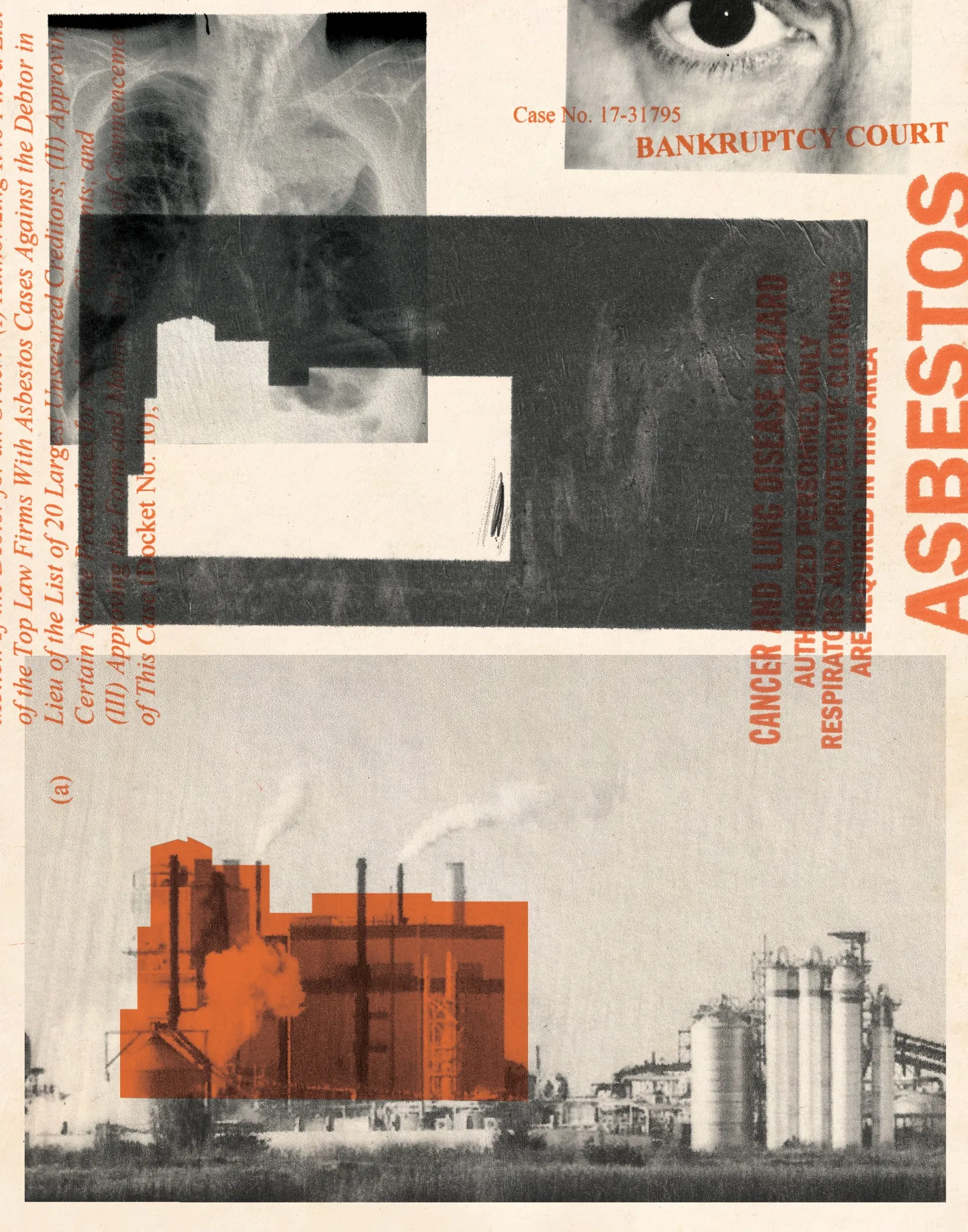
Photo illustration: Vanessa Saba for Bloomberg Businessweek; photos: Getty Images (4)
How Corporations Use the Texas Two-Step to Avoid Asbestos Lawsuits
Companies facing litigation are placing liabilities linked to the mineral into new units and declaring bankruptcy. Claimants are pushing back.
As far back as the Stone Age, humans started digging asbestos from cliffs or riverbeds. They mixed the fibrous silicate mineral into clay for pottery that could better withstand heat, and northerners stuffed it between rocks to insulate their shelters against the winter cold. The ancient Greeks and Romans wove asbestos fibers into cloth for garments, tablecloths and wicks that took advantage of the mineral’s ability to handle heat. By the peak of the industrial revolution, thanks to its extraordinary physical properties, asbestos was mined at sites across the US and used widely in daily life—from kitchen tiles to toothpaste, surgical thread to cement pipes. It could resist fire, stretch without breaking and tolerate abrasive or caustic cleaning chemicals.
But around the turn of the last century, British doctors detected evidence of a darker side to the stuff. People who worked with asbestos were developing serious illnesses, particularly mesothelioma, a cancer that can overwhelm the linings around the lungs, abdomen or heart. In the 1930s, some companies that manufactured or utilized asbestos products began improving ventilation, offering employees medical checkups and supplying them with protective gear such as dust masks and coveralls. Others simply downplayed the causal link. For decades.