What My Brain Scan Revealed About the Science of Persuasion
Neuroscientists have come a long way in understanding how and when people come around to a different point of view.
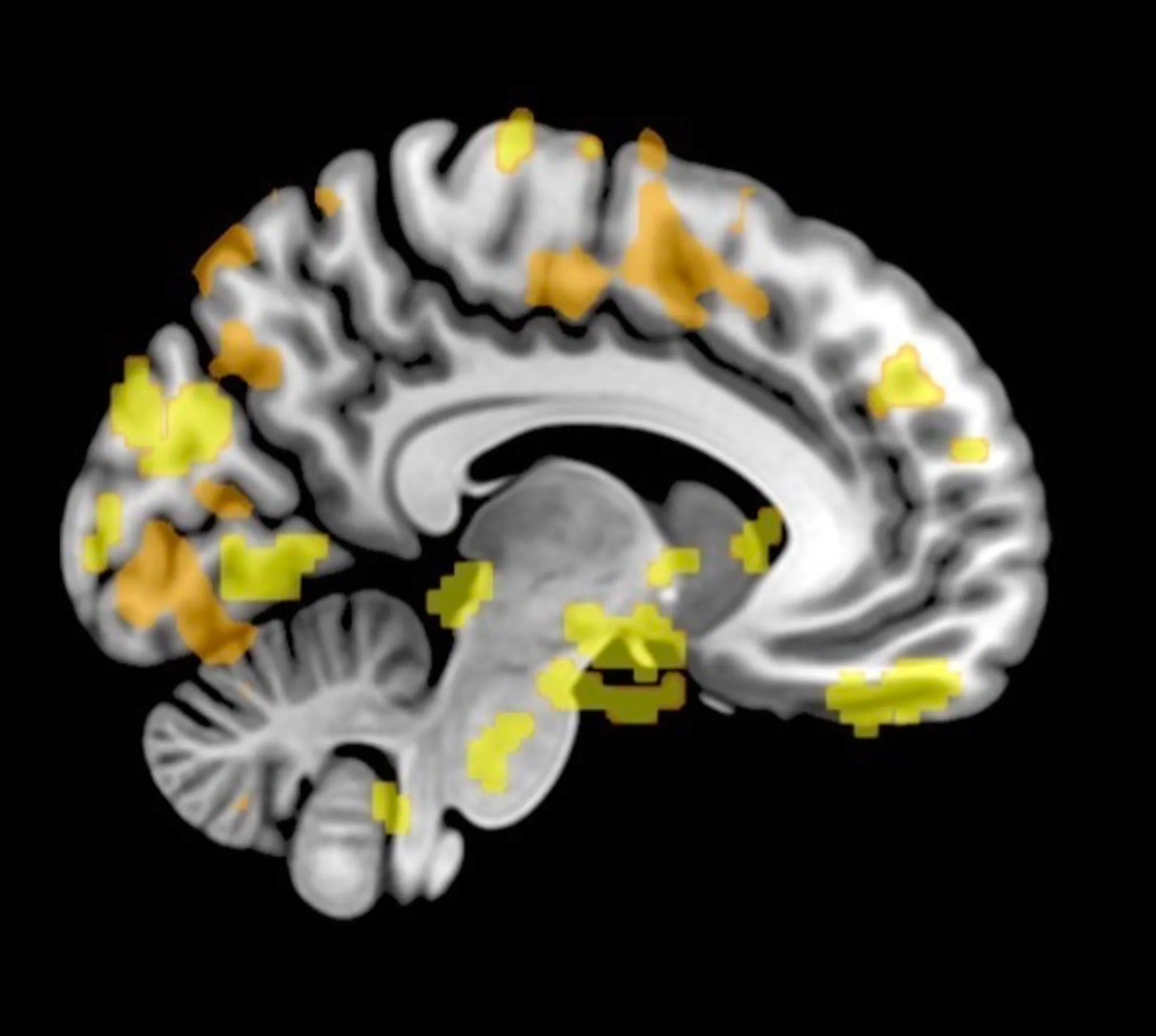
An MRI of Sarah McBride’s brain.
Source: Sarah McBride
What exactly happens when we change our mind? Pursuing this question is how I found myself, one recent morning, lying in a fancy brain scanner known as an fMRI machine and watching cartoons at the Waisman Center at the University of Wisconsin at Madison. On the other side of a glass screen, a technician and two neuroscientists watched me—or, more accurately, watched my brain.
Cartoons notwithstanding, this is serious work. Understanding the neural basis of persuasion is a tantalizing prize for scientists and doctors, and obviously (and less nobly) businesses, politicians, and anyone else trying to get others to do their bidding. But the science is difficult enough to border on science fiction. Unlike regions of the brain that control motion, chiefly the motor cortex in the frontal lobe, the portions that control thought and persuasion are spread out. There’s no quadrant of the brain that lights up an fMRI machine when we’re thinking, “Huh, I guess you’re right.”