Inventor of Wind Turbine Is Trying to Harness Unlimited Power
The race is on to develop floating wind farms that can become an almost boundless source of emission-free electricity.
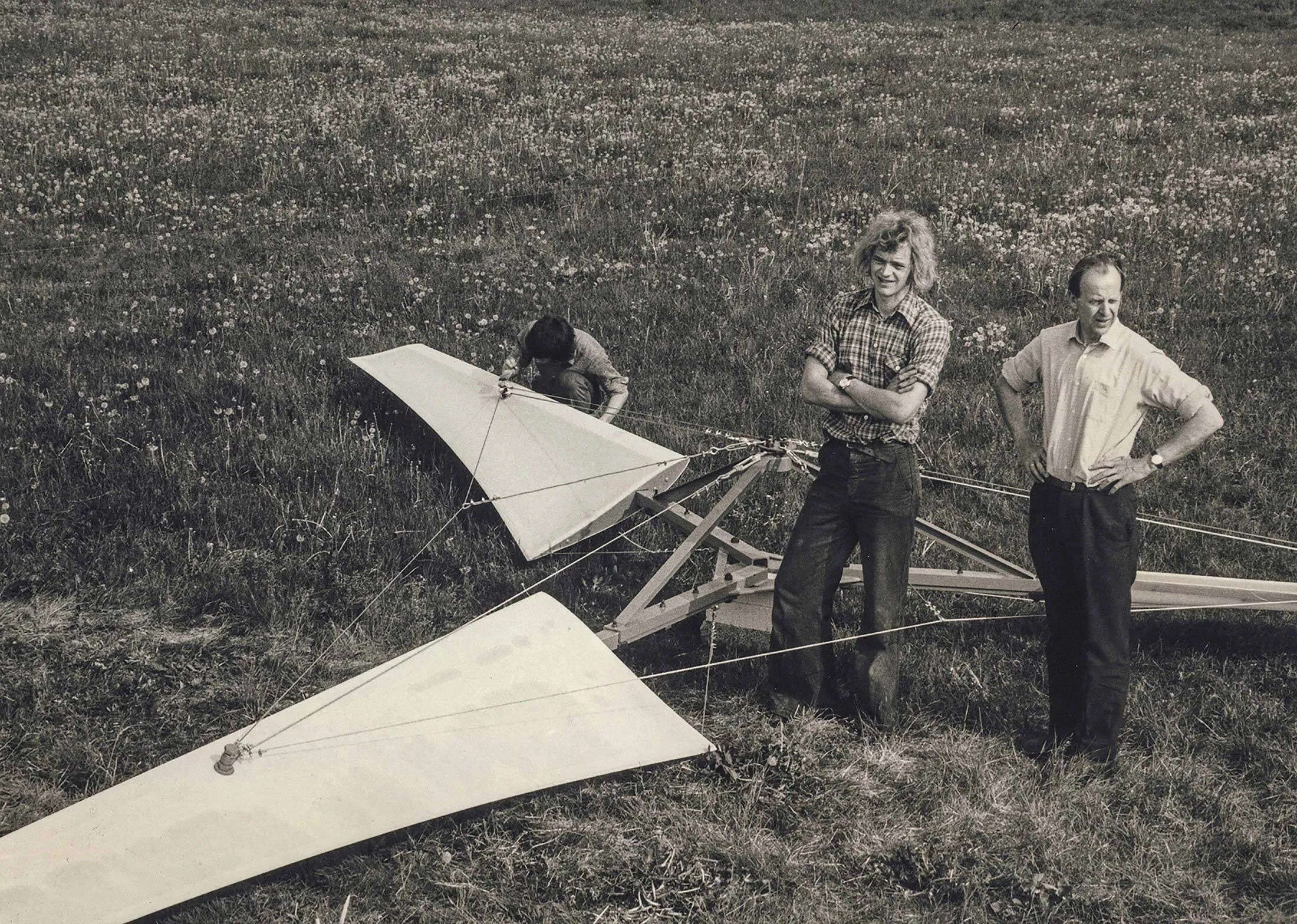
Henrik Stiesdal (center) stands with his father (right) during the construction of an early wind turbine in rural Denmark.
Source: Hans Stiesdal
The turbine inventor Henrik Stiesdal is small in the shadows of gigantic curves of steel, watching workers weld towers that will be rooted to the seabed. This factory in the Danish countryside has churned out thousands of masts for wind turbines whose blades can stretch more than 500 feet. It’s an important contribution to a global wind revolution that’s supplying electricity to millions of homes worldwide.
Soon the factory will set about a new task, manufacturing components for a different kind of turbine, designed by Stiesdal, that bobs on the open sea. These structures promise to put the strong, consistent gusts that blow over deep waters within reach for the first time. The turbines now found around Denmark, England, and the other coastlines of the North Sea are made for shallow water and require large underwater structures to fasten them in place. “Normal places don’t have shallow water near population centers—they have deep water,” says Stiesdal, a legendary turbine inventor and former executive at some of Europe’s biggest wind companies. This situation renders many coastal places unsuitable for wind power. “We could power California many times over with their offshore resource,” he says, “but it all has to be floating.”