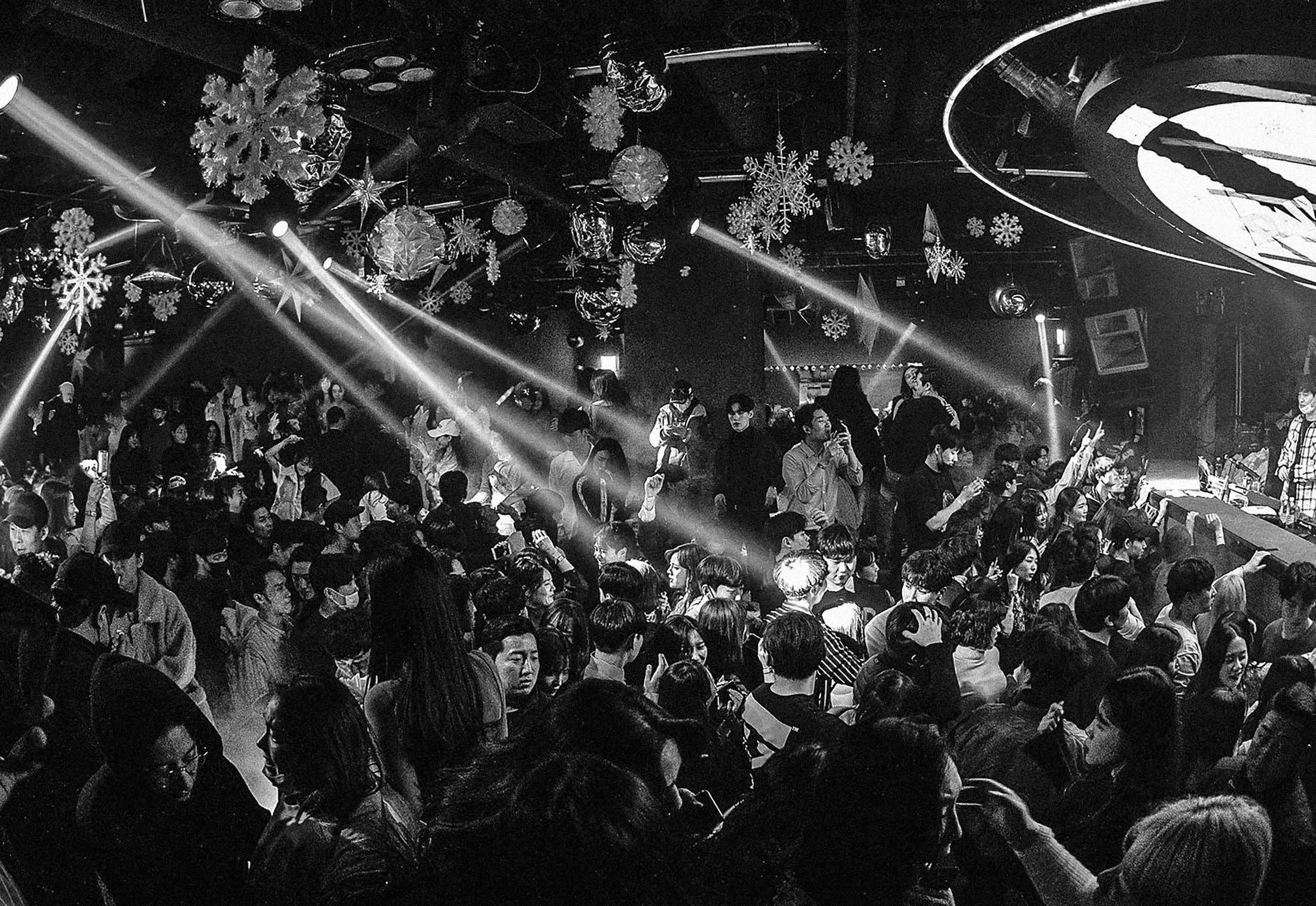
Seoul’s Burning Sun nightclub in January 2019.
Source: Burning Sun/FacebookThe Dark Side of K-Pop: Assault, Prostitution, Suicide, and Spycams
A wave of scandals has brought unwanted attention to South Korea’s squeaky-clean music industry.

If K-pop has a spiritual home, it’s probably SMTown. Operated by SM Entertainment Co., the six-story complex in Seoul’s wealthy Gangnam district is a high-tech shrine to South Korea’s most successful cultural export. The lobby walls are covered with framed black-and-white headshots of SM’s “idols,” as K-pop stars are known. By the elevators are hundreds of Polaroid-style portraits of the same artists in a more candid light, albeit with skin so touched up it appears carved from marzipan.
The centerpiece of SMTown is a museum honoring the label’s most prominent groups. There’s an extensive section for Super Junior, a 13-member boy band that was one of K-pop’s first big-ticket acts, and another for Girls’ Generation, a syrup-sweet ensemble that flirted with global stardom thanks to mixed-language tracks such as I Got a Boy. (“I got a boy/ Cool!/ I got a boy/ Nice!/ I got a boy handsome boy!”) There are also several displays for SHINee, a five-member male group. Or rather, a formerly five-member male group. In December 2017, lead singer Kim Jong-hyun died by suicide in a Seoul apartment. “The depression slowly chipped away at me, finally devouring me,” he wrote in a final note. “It wasn’t my path to become world famous. … It’s a miracle that I endured all this time.” Kim was 27; had he been revered in the West, he might have been remembered in the same breath as other megastars, such as Jimi Hendrix and Amy Winehouse, who died at that age. But at SMTown, Kim’s death never happened. An otherwise detailed chronology of the band makes no mention of it; on one side of the relevant date he’s in the photos, and on the other he isn’t.