Sometimes It Rains Rockets in Russia
Inhabitants of tiny villages 250 miles north of a Russian launch pad transform fallen space metal into everyday necessities.
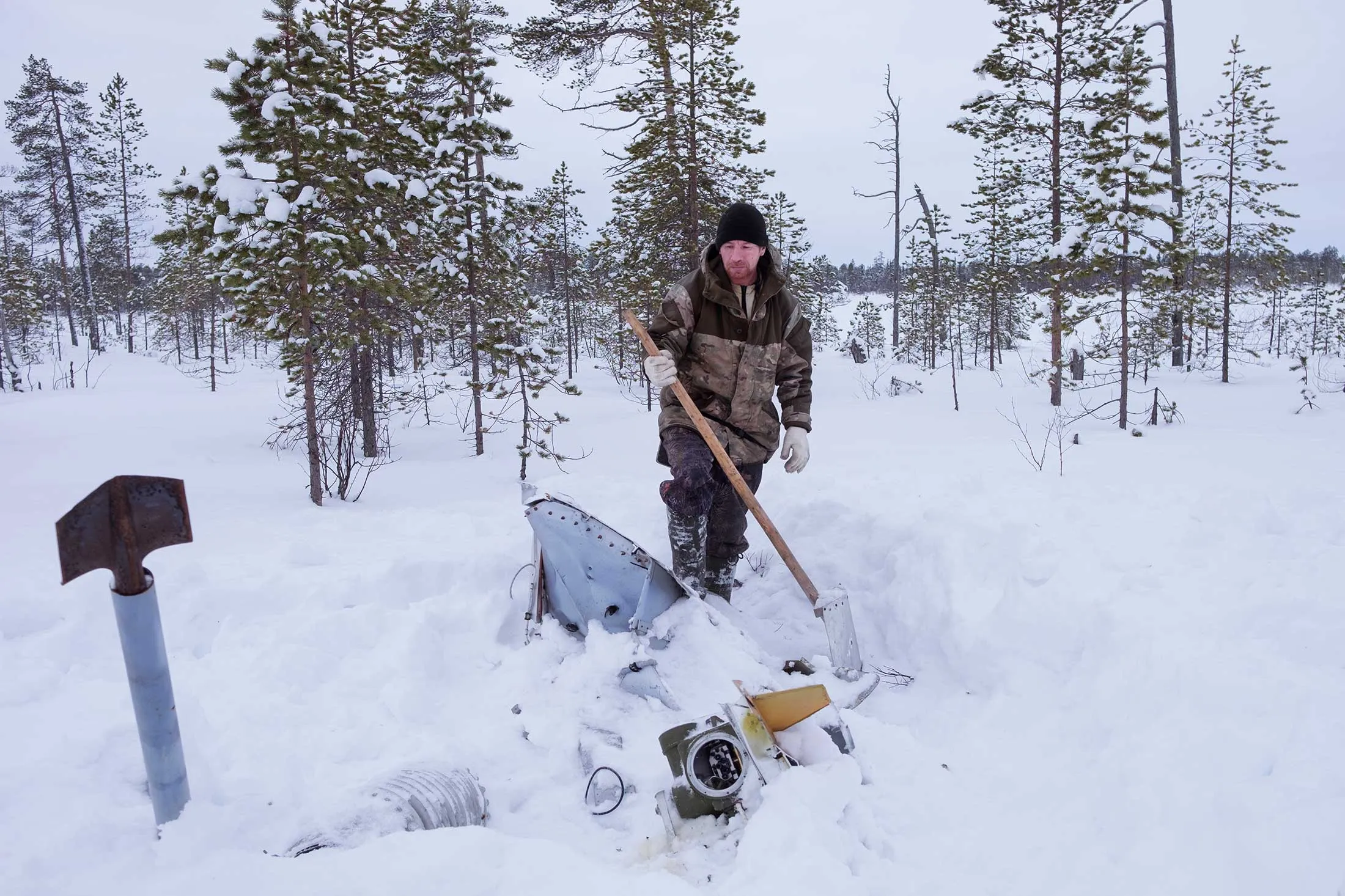
Pavel, 46, uses a hoe made from a rocket part to dig out some debris a few hours north of Dolgoshchelye, one of about 10 communities where residents scavenge for space junk.
Photographer: Raffaele Petralla/Prospekt
After the Soviet Union fell, the Russian government decided to reduce its dependency on a spaceport in Kazakhstan, turning instead to the Plesetsk Cosmodrome, 500 miles north of Moscow. Today, when Russia launches satellites from Plesetsk, most of the booster rockets fall into the Barents Sea. But sometimes they miss the water. Every so often, villagers 250 miles north of the cosmodrome hear the sound of spiraling rockets, see the toxic orange clouds in their wake, and know that space detritus isn’t far behind.
Rome-based photographer Raffaele Petralla traveled to these remote communities twice in the past 15 months. He wanted to explore what happens when the Space Age collides with the constellation of outposts, many of them impoverished, that lie beneath the flight paths. What he found is a finders-keepers space-junk economy in which locals scavenge and recycle rocket rubbish that the government would rather not fetch anyway. A projectile’s outer sheeting might become a snow sled or boat. And like a scene out of Star Wars, other parts might be sold to passing traders, who harvest the gold and titanium inside for sale in the nearby city of Archangelsk.