Welcome to the New Space Age
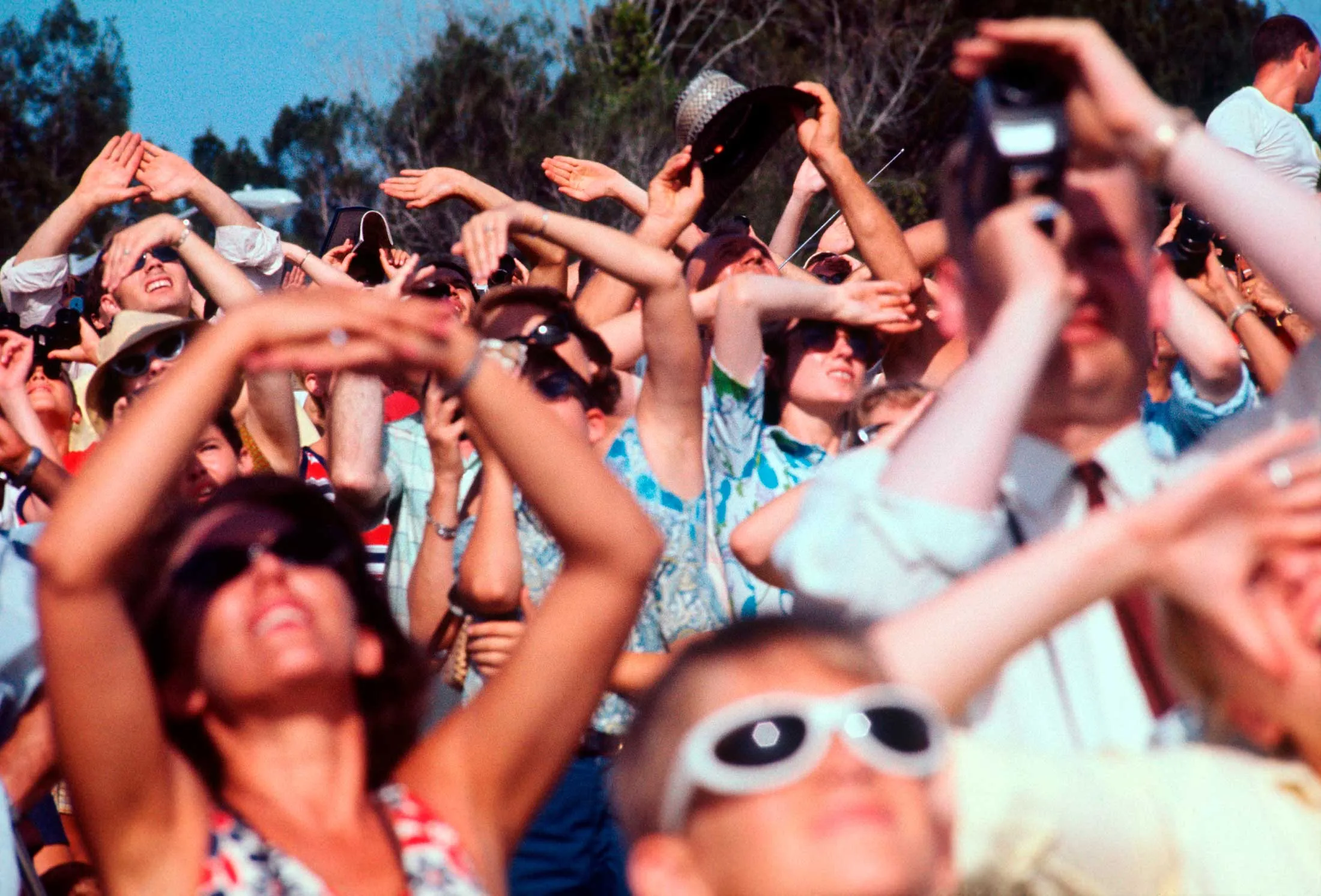
A crowd on the beach in Titusville, Fla., watches the launch of Apollo 11, the first manned mission to land on the moon, on July 18, 1969.
Photographer: David Burnett/Contact Press Images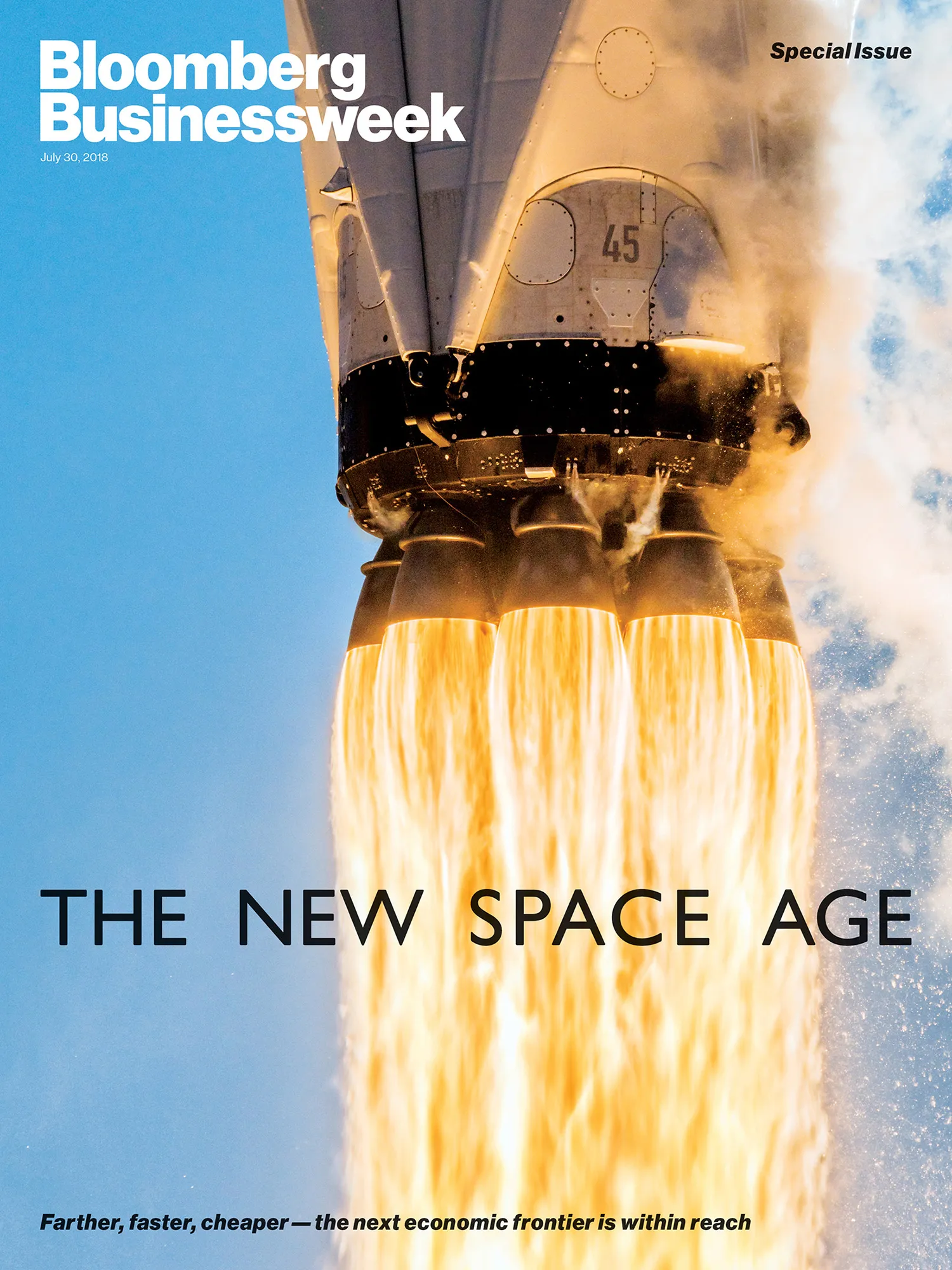
They say there are only two plots: Species goes on a journey, and aliens arrive in town. UFO sightings aside, humans have been living the first story for decades. The first stage of the trip began in 1957, when Sputnik 1 arced its way around the world, and ended in 1972, when Apollo 17 Commander Gene Cernan traced his daughter’s initials in moondust and stepped off the lunar surface. The second big stage is upon us now.
A trail marker was laid down in February, when SpaceX equipped a Falcon Heavy rocket with a Tesla Roadster and a data crystal containing Isaac Asimov’s Foundation trilogy and fired it toward Mars, then landed two of the Falcon’s boosters in synchrony at Cape Canaveral. At least 2.3 million people watched the YouTube livestream—high by internet standards, if far short of the hundreds of millions who tuned in for the first moon landing. Where the Apollo era was marked by singular, cost-is-no-object technological feats and suffused with political and cultural meaning, the new one has been more diffuse and democratic, fueled by ever-cheaper launches that have opened space to startups, researchers, and smaller countries. A full-fledged space economy is within reach, and with it, perhaps, a permanent human presence above.