Satellites Need Sunscreen, Too
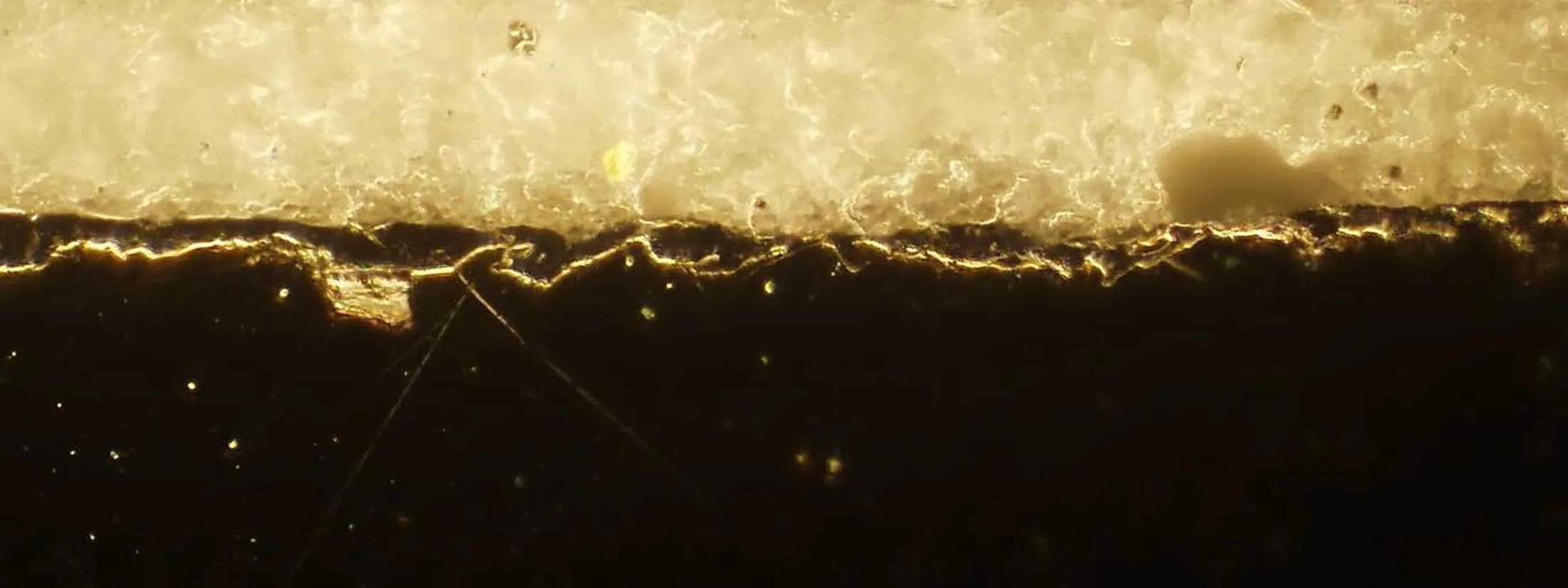
SolarBlack coating on the Solar Orbiter’s heat shield.
Source: EnBio
The European Space Agency had a problem: A satellite it was building to study solar flares and wind risked burning up as it reached its final orbit, nearer to the sun than Mercury’s closest approach. At 26 million miles from our neighborhood star, the ESA’s Solar Orbiter, scheduled to launch in February, will face temperatures above 500C (932F). In such intense heat, traditional coatings made from organic compounds break down and form a vapor that can condense on cooler parts of the spacecraft, blurring the lenses of optical instruments and fouling other sensors. The ESA considered using a heat shield of woven carbon-fiber fabric but discovered that the intense vibrations during launch would shake off carbon particles, reducing their effectiveness.
The solution turned out to be one of humanity’s earliest inventions: black pigment made from the burned bones of prey, similar to the stuff used to decorate the walls of prehistoric caves. “This is really a back-to-the-future story,” says John O’Donoghue, co-founder and chief executive officer of Enbio Ltd., the Irish company behind the coating planned for the Solar Orbiter. “The oldest-known art in the world was painted with charred bone.”