The Next Cancer Drug Might Start in Outer Space
The advantages of pharmaceutical research on the International Space Station.
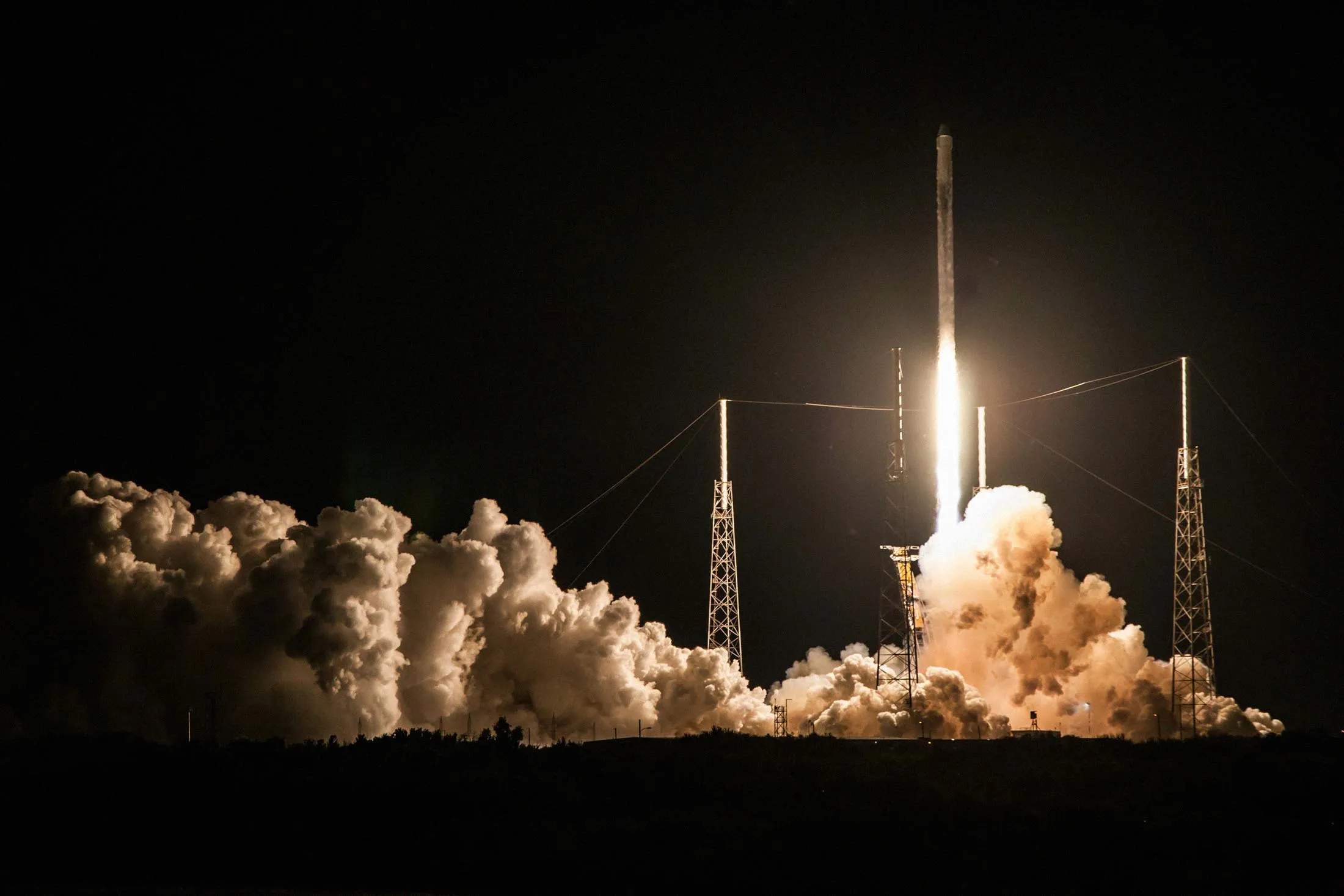
A SpaceX Falcon 9 rocket with supplies for the International Space Station is launched just before dawn on June 29 at Cape Canaveral Air Force Station in Florida.
Source: SpaceX
Shou-Ching Jaminet, a molecular biologist and former researcher at Harvard Medical School, spent almost a year preparing an experiment for her small biotech startup, Angiex, to study the effects of weightlessness on a potential cancer drug. By June she was nervous with anticipation, readying her project for launch on an International Space Station resupply mission powered by a SpaceX Falcon 9. But before it blasted off, she wanted to lay eyes on a dolphin. In rocketry, she’d been told, it’s good luck to see one (and bad luck to see a pig) prior to liftoff. So the night before launch, she and her family headed to a waterfront restaurant near Cape Canaveral Air Force Station in Florida. It was an auspicious dinner: She spotted not one dolphin but four.
At precisely 5:42 the following morning, plumes of fire lit up the sky, and the rocket took flight without a hitch. Angiex Inc. was in space. The company, which Jaminet co-founded with her husband and a former Harvard colleague, would soon be among the more than 2,400 research projects started on the ISS since it went into service in 1998. Orbiting about 250 miles above Earth, the station has provided a coveted platform for scientists to conduct experiments in the microgravity and extreme temperatures of space. Their work is monitored by a crew drawn from around the world. (Resupply missions also ferry food; Angiex’s flight included maple-smoked salmon at one astronaut’s request.)