Robots Could Replace Surgeons in the Battle Against Cancer
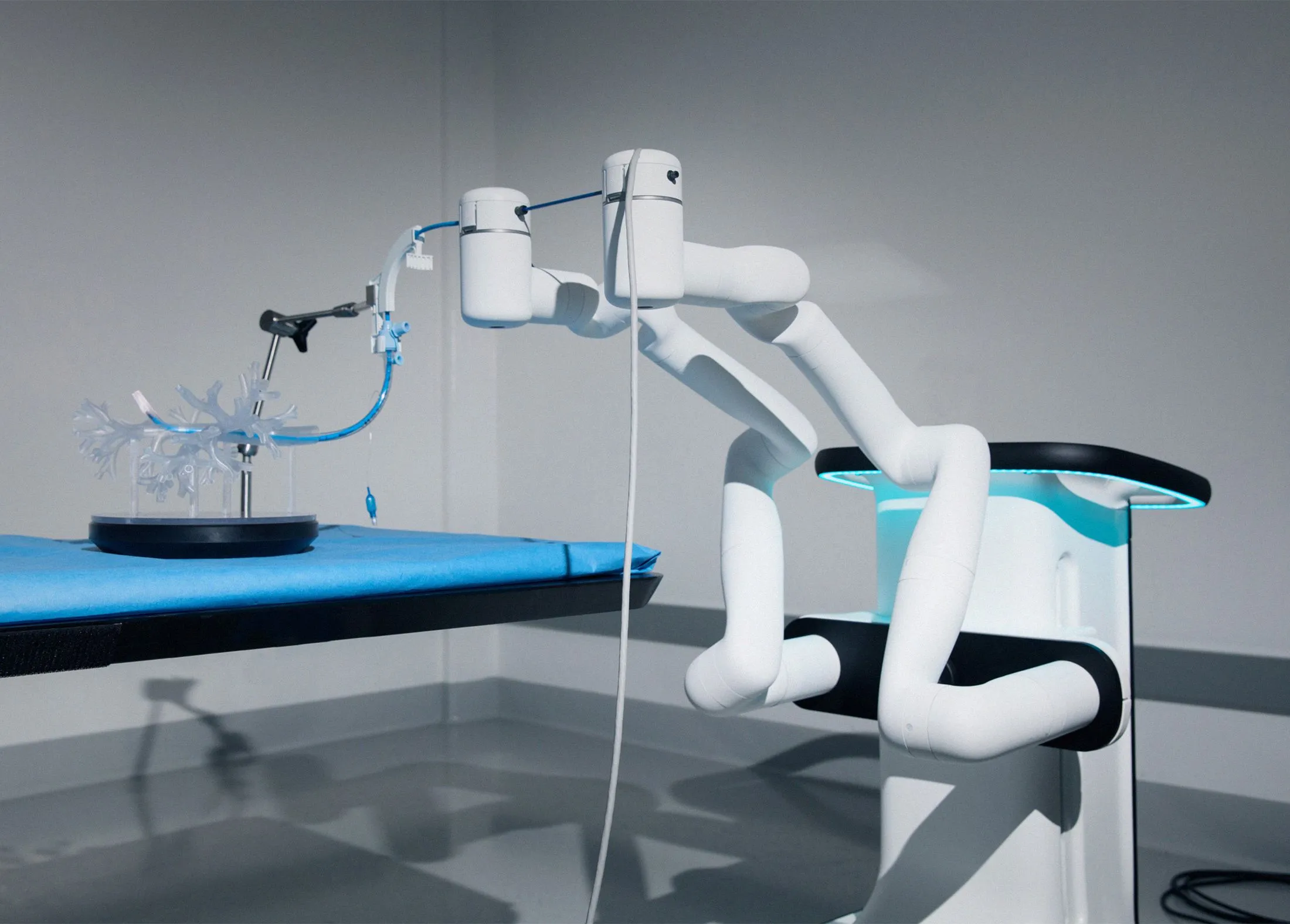
The Monarch Platform.
Photographer: Jack Bool for Bloomberg Businessweek
Fred Moll was a young surgical resident when he assisted on his first keyhole surgery in 1982. The technique, otherwise known as laparoscopic surgery, requires doctors to use unusually slender, extra-long tools to perform operations through tiny incisions. Today’s laparoscopic surgeons use high-definition cameras to look inside patients’ bodies, but even the older primitive version Moll used blew his mind. “Wow,” he recalls thinking. “This has to be a better way of doing things.” He withdrew from his residency and began working on medical devices.
Moll, 66, is best known for the da Vinci Surgical System, a large industrial robot that surgeons operate, using electronic hand controls and a video monitor. The device, the top-selling surgical robot, is used in laparoscopic surgeries in thousands of hospitals and retails for about $2 million. Its success has propelled creator Intuitive Surgical Inc., the company Moll founded in 1995, to a market value of about $50 billion. Thanks to Moll’s work, robotic surgery is now commonplace, but he argues that it can be improved because it still depends on the precision of a surgeon’s hands. Moll believes that robots, powered by machine-learning algorithms and operating autonomously, are already capable of performing simple medical procedures. And after seven years of working in secret to prove it, he’s ready to take the first big step.