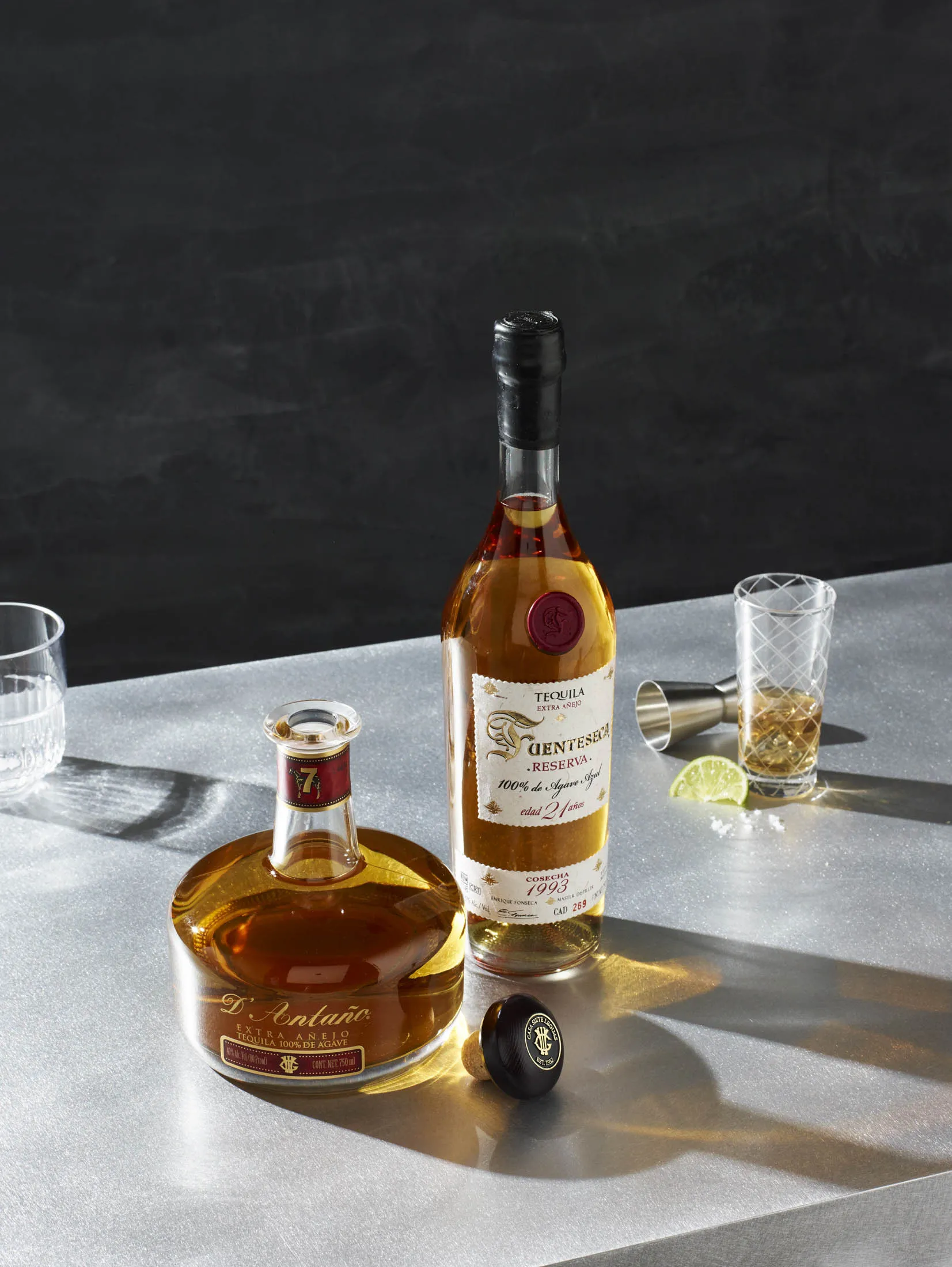
Siete Leguas’ D’Antaño tequila and a 21-year-old Fuenteseca extra añejo.
Photographer: Sarah Anne Ward for Bloomberg Businessweek
Sales for Tequila Have Never Been Better. But Quality? Not So Much
The margarita—not the martini, or the Manhattan, or even the humble daiquiri—is the most popular cocktail in the U.S. And it’s not even close. Since 2002 tequila sales have risen 121 percent overall, while sales of super-premium tequilas grew eightfold, according to the Distilled Spirits Council of the U.S., a trade organization. Vodka volumes, by comparison, gained a mere 2.4 percent; rum declined by 0.2 percent.
It’s also been a time of consolidation. Global conglomerates have bought most of Mexico’s distilleries, throwing cash around like college students doing shots at the local Tex-Mex joint. In 2002 rum giant Bacardi Ltd. acquired Cazadores, a then-80-year-old Mexican brand; in January it acquired Patrón Spirits Co. at a value of $5.1 billion. Meanwhile, Sauza became part of conglomerate Jim Beam Inc. after a sale in 2005. The following year, Jack Daniel’s parent company, Brown-Forman Corp., purchased Herradura, a family-owned brand for more than 125 years. Last year, the largest of them all, Diageo Plc, gave George Clooney and associates as much as $1 billion for Casamigos Spirits Co. Once a mysterious distilled beverage from south of the border, tequila is a favorite for any occasion—from fraternity parties to business dinners at Michelin-starred restaurants.