Economics
Battle of the Pork Rind Heavyweights
How rival companies, low-carb diets, and changing demographics are making pork rinds an economic indicator for our time
This article is for subscribers only.
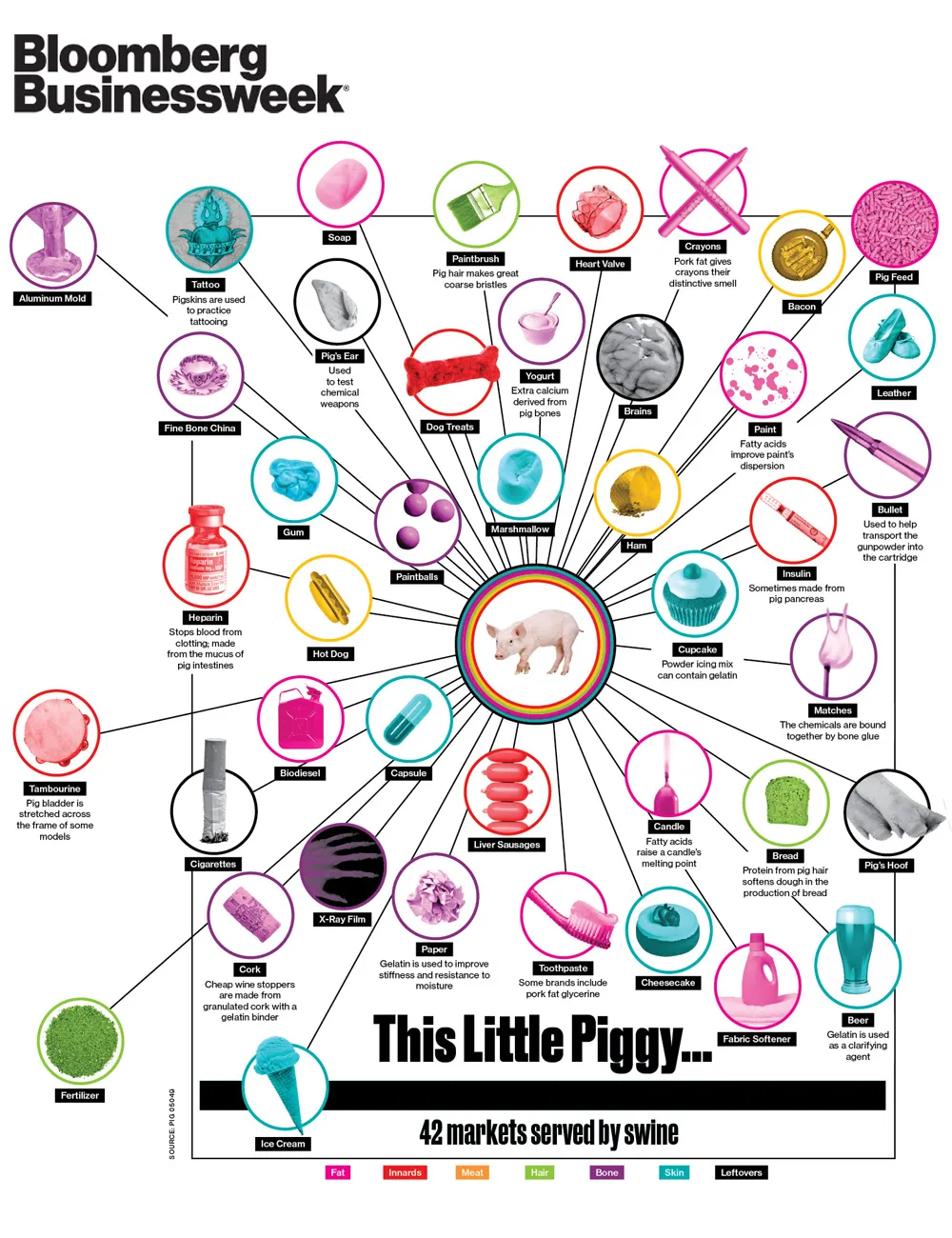
To make Baken-ets pork rinds for No. 1 client Frito-Lay, the $13 billion-a-year snack arm of PepsiCo, Rudolph Foods uses what it calls a secret two-step process at its flagship plant in Lima, Ohio—“the pork rind capital of the world,” Rudolph claims.
Pork skins, removed from slaughtered pigs by mechanical skinners at meat packing companies, arrive at Rudolph’s plants in 20-ton lots aboard refrigerated 18-wheeler trucks. Precut into roughly one-by-three-foot rectangles, they are trundled around in metal bins holding up to 1,800 pounds each and fed into mechanical cutters that dice them into one-inch squares.