

How to Negotiate with Iran
Wendy Sherman, the former US deputy secretary of state and architect of the 2015 nuclear deal, says the current situation in Iran is harder, riskier and strategically misjudged.
Eight weeks on from the start of the US-Israel war with Iran, the conflict is being watched with increasing alarm by Wendy Sherman. The former top US negotiator spent years sitting across the table from Iranian officials, and sees a far more volatile landscape today. Her concerns also go beyond the Middle East, where she sees China and Russia as among the beneficiaries of this war.
This conversation has been edited for length and clarity. You can listen to an extended version in the latest episode of The Mishal Husain Show podcast.
Help us understand this situation from your deep experience of trying to find common ground with Iranian officials. What do you see that the rest of us might miss?
It’s critical for people to understand Iran’s culture, history, people, government [and] theology. It’s very different [to] American or Western sensitivities. It is a culture of resistance.
When the 1979 Iranian Revolution happened, it was really a reaction to what we and the British had done in 1953, when we knocked off a prime minister [Mohammad Mossadegh] because we were afraid that Iran was going to nationalize the oil industry, and we thought that would hurt us. Oil being the constant here. We put in the Shah, who was probably good for us Westerners, but terrible for Iran. 1
1 In a previous Weekend Interview, Iranian-American scholar Vali Nasr argued that the two pre-eminent institutions of Iran have long been the monarchy and the clergy. “When the monarchy was in power, and it abused power, the clergy stood up for the people,” he said. Now, he says, the trend has reversed and there is “enormous nostalgia among Iranians for the Shah.”
Every time President Trump tries to bully Iran — Iran has immense pride and dignity. They’re a terrible regime that slaughtered protestors in the street, but it is who they are.
When you sat in those rooms with Iranian negotiators, did they lecture you along these themes?
Oh, we certainly had lots of lectures. Over time however, we just got down to the brutal details. When you’re negotiating around nuclear or military issues or proxies, the devil is definitely in the details.
The regime now is more hardline. There’s even more control by the Islamic Revolutionary Guard Corps [IRGC]. That means the concessions the president thinks will come easily, will not. They will resist. They will never give up what they believe is their right to enrich [uranium] — they may voluntarily suspend it, but won’t give up the right. I don’t think they'll give up their relationship to their proxies — they may reduce the level of their support. I don’t think they'll give up their missile program — they may be willing to constrain it in some ways.
Trump wants them to really just capitulate. That’s never going to happen. 2
2 Sherman goes straight to the heart of what are understood to be key US demands over Iran’s ballistic missile and nuclear programs and its support for Hamas, Hezbollah and the Houthis in Yemen. Iran has called US positions “maximalist” and called US sanctions “economic terrorism.”
Precisely because it is a harder-line regime than the one you dealt with, isn’t there a role for a maximum pressure strategy? Keeping Iran on its toes, changing of position, the overwhelming use of military force?
In these kind[s] of negotiations [there always] needs to be a credible threat of force and in this case, perhaps even some of the mechanisms the president has used. But he doesn’t have a strategy. He’s very tactical [and] very transactional — as he was as a developer. In this case, I don’t think that approach will work.
He has cost our alliances, American taxpayers, 13 American lives, our inventory of weapons, our ability to project power abroad. 3
3 More than 3,000 Iranians are estimated to have been killed since the war began. A new Bloomberg analysis of areas of damage in Tehran found that around 32% of buildings struck were linked to the military, 25% to industry, 21% to civilians, 19% commercial and 2% governmental.
Before this war, the Strait of Hormuz was open. Now, Iran will always believe they have control over it. Even if they open it up again — which I certainly hope happens — we all know they can close it again.
There is no question that President Trump has diminished Iran’s [military] capability, but not their fast boats, drone technology [or] nuclear knowledge. It may take them time to reconstitute their missiles, their navy, their nuclear program — but I think they will try to do so.
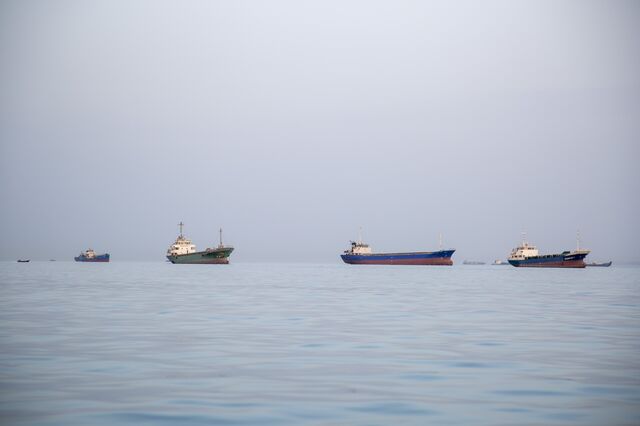
Do you think the Strait of Hormuz could be kept closed, even with a few men with small arms on speedboats?
Shipping is about insurance, and whether insurers feel there’s adequate security to let those ships go through. Even in the brief time when it was, quote unquote, “open again,” the insurers didn’t think it was safe enough to send the ships through. That’s the bottom line here.
What are you hearing about the president himself? Do you think he is well? There’s been increasing talk about him posting through the night, and whether we are moving into a different era in terms of his decision making.
I can’t begin to know what is in Trump’s head. I’m not sure he knows from moment to moment. He’s always tweeted at night. He is a night owl. I don’t think that’s new, but I do think his impulse behavior has increased and that is of great concern to me.
I’m not sure he understands the stakes here. It’s not about just winning this war. It’s about what it means for America going forward. He’s due to go to China in May to meet with President Xi [Jinping]. I think he’s going to go in a weakened position, no matter how things turn out.
Even if an agreement is reached, it will be principles [and] broad outlines. Then people will have to do all of the details, which will take weeks, if not months, if not over a year to resolve. There will be this disequilibrium for a very long time in the Middle East.
Some of our best allies — Canada, the UK — have said they can’t rely on us and have beaten a path to China. 4
4 UK Prime Minister Keir Starmer, in a veiled critique of Trump, said last week that he was “not going to yield” to US pressure to join the war. Canadian Prime Minister Mark Carney has been more explicit, arguing that “many of our former strengths, based on our close ties to America, have become weaknesses.”
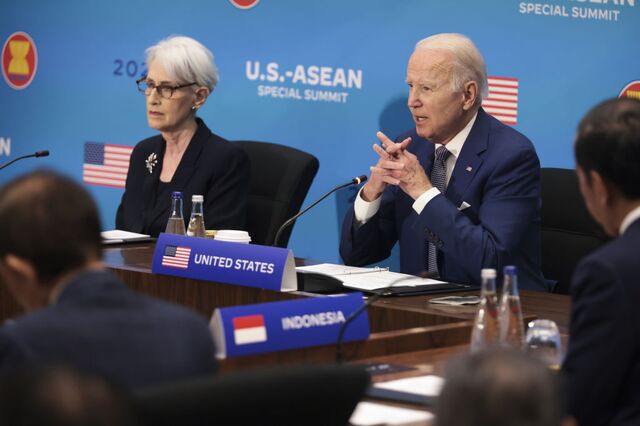
Elements of this have happened before, haven’t they? In your book you describe the secret backchannel that you were part of with Iran, and the moment you had to go to Brussels and tell the Europeans that there was a complete draft agreement between the US and Iran in place — of which they knew nothing. 5
5 Sherman’s memoir, Not for The Faint of Heart, was published in 2018, between her stints in the Obama and Biden administrations. By October 2013 there had been a year of clandestine US-Iranian negotiations and Sherman felt “it was past time to tell our partners” — including close allies France, Germany and the UK. The Joint Comprehensive Plan of Action [JCPOA] was finalized in 2015.
Everyone understood then that if we could not get an agreement, it would be the American military that would have to intervene and try to change the calculus of Iran. Everyone understood that no deal would be made unless it was a deal the US could agree to.
No one likes that we have unequal power, but everybody understands it. My European allies were not happy, but they were not shocked. Russia and China, who were part of this negotiation, were not shocked, and actually were happy that things were moving along.
So yes, the US has unequal power, but we have to be humble about it.
Do you accept then that this [cutting out of allies] is a version of what has happened before?
No, I don’t think it’s the same. We brought all of our European allies in. We brought Russia and China in. We went to the United Nations. I spent an enormous amount of time talking to the Gulf Arab states, to Israel, Australia [and] anybody else who wanted to talk about what we were doing.
We were as transparent as we possibly could be in a timely fashion. That deal, [which] came in through the secret channel, had brackets in it. Ministers came together, some changes were made. People had input. America acted with its power, but we did not act alone.
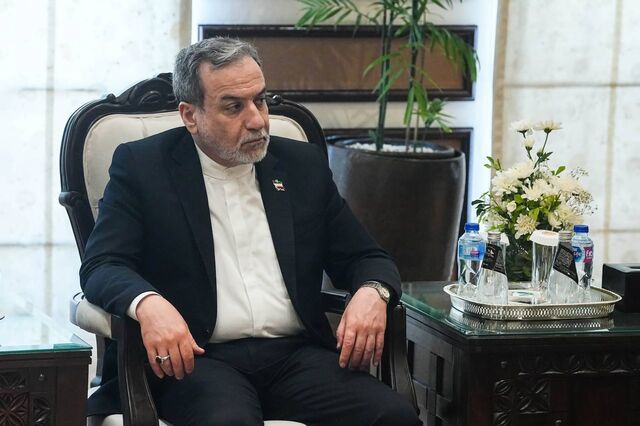
A key point-person on the other side at that time was Abbas Araghchi — now Iran’s foreign minister. What was your experience of him? 6
6 Araghchi was Iran’s deputy foreign minister and chief nuclear negotiator in the 2013-15 talks. He was part of the most recent Iranian delegation to Islamabad, alongside parliament speaker Mohammad Bagher Ghalibaf.
He is very smart. He is very tough. He can get angry. He is part of the revolution. He had a strong relationship with the IRGC even though he’s getting some criticism now.
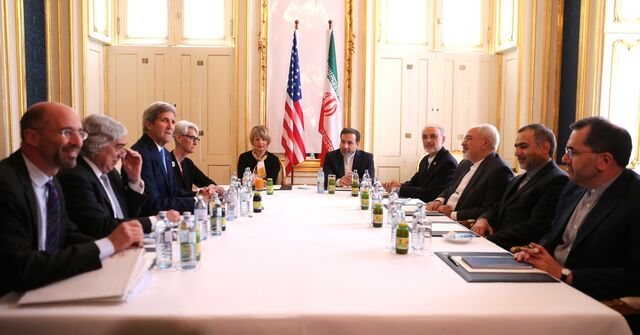
Am I right in thinking you did develop something of a bond with him?
Yes. I want to be clear. I don’t think negotiations are about trust. That word is thrown around a lot. I don’t trust Araghchi, I don’t trust Iran. He doesn’t trust me. They don’t trust me. In fact, at one point, there was “Death to Wendy Sherman” on the streets of Tehran. 7
7 In 2013, at a Senate committee hearing, Sherman was asked whether Iran could be trusted to keep its side of a bargain. “Deception is in their DNA,” she replied. Iranian newspapers ran cartoons based on the comments and her name was shouted in the streets, “unnerving her family,” she says in her memoir.
You have to have some respect that your adversary has interests. You may not agree with their interests. You may think they’re horrible — and I think the regime is awful. Even though it was unequal, at the end of the day, it’s a negotiation. They have to get something out of it.
I’m going to quote part of your book: “Years after the end of the negotiations, Araghchi still sends me a greeting at Christmastime and I send him greetings at Nowruz, the Iranian New Year. Although I don’t, as a Jew, celebrate Christmas, I do appreciate the holiday sentiment. We don’t know how our human connections may yet serve the world.” Did you send him a greeting this year at Nowruz?
No. We haven’t been in touch in years now, since the first Trump administration. All of the ties were broken.
I had a discussion with [Araghchi] and [former Iranian negotiator Majid] Takht-Ravanchi about being Jewish. I couldn’t shake their hand because I was a woman. I had a conversation with them once saying, We really have something in common. I grew up in a Jewish community where there were Orthodox Jews and men could not shake my hand.
At first they were sort of stunned, but then we talked about it. Some of it was trying to reach across to understand each other; it creates a human bond. It doesn’t change that they have interests and they’re going to negotiate as tough as they can, but we could take down the veil a little.
Did you hesitate about telling them you were Jewish?
No, because I knew they knew.
What do you think the landing zone could be now, for a deal?
What’s been reported is perhaps a suspension of [Iran’s] enrichment program for a number of years — whether that’s 10, 15 or 20, I don’t know. It would have to be monitored and verified by the International Atomic Energy Agency [IAEA] and it would have to be quite intrusive monitoring and verification. 8
8 Under the 2015 JCPOA, Iran agreed to IAEA monitoring of its nuclear program, which it maintains is for civilian use. This continued even after Trump abandoned the agreement in 2018, but cooperation with inspectors ended last year.
It would mean some controls on their missile program. It might be some controls on their proxies. It would certainly be opening the Strait of Hormuz.
I think Iran will want us out of the Middle East; and that is a problem. Our second-largest naval base is in Bahrain and, of course, Israel is an ally and we try to protect their security.
There [are] lots of pieces of this puzzle. It’s a very complex and detailed negotiation.

Get the Bloomberg Weekend newsletter.
Big ideas and open questions in the fascinating places where finance, life and culture meet.
By continuing, I agree to the Privacy Policy and Terms of Service.
Even more than what you did 10 years ago?
Much, much, much more.
The more we talk about it, the more elusive it feels. How do you think this is going to end? Apart from anything else, the global economy is going to steadily be eroded if it isn’t.
I quite agree with you.
My guess is that Iran will still have some measure of control over the Strait. What will happen to that stockpile of highly enriched uranium? It’s not like you can resolve that in a day. It is a complex, tedious operation. There’s so much to work out here. I worry about the administration’s ability to do it.
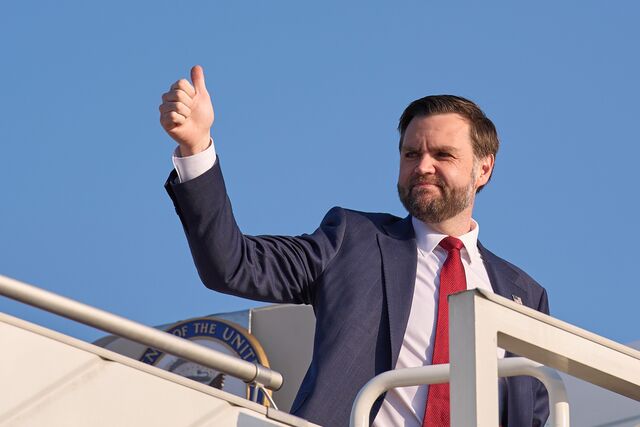
I was glad to see that Vice President [JD] Vance brought some experts with him [to talks in Pakistan], but I’m not sure any of them were in the rooms. I had nuclear physicists, sanctions experts, lawyers and Treasury folks on my team. I had people who spoke fluent Farsi. I had literally hundreds in the US government who were engaged in this. I don’t see any of that infrastructure here. 9
9 According to the White House, a “full suite of US experts” accompanied Vance, Steve Witkoff and Jared Kushner to Islamabad. This included the Vice President’s National Security Adviser and Special Adviser for Asian Affairs.
What are the implications for the rest of the world? You mentioned China already. In what ways is it benefiting?
We’ve already seen several leaders make their way to China because they want to strike trade deals.
That was happening before this war.
But it’s happening at an accelerated pace.
We saw the Iranians say, You can come through the Strait of Hormuz if you pay us in Chinese yuan, not US dollars. Oil has always been traded in US dollars — that may change. The US dollar has always been the world’s reserve currency. I think we will see a greater move to a basket of currencies. All of this diminishes US power.
Xi, who has tremendous control over his country — the kind of control Trump would love to have — will be able to say,You took military action against a country for which there was no imminent threat. If we try to take further control of Taiwan, how can you criticize us? That is very concerning.
China has also got to witness the US at war and see its munitions depleted.
They’ve seen that our military is staggeringly, exquisitely capable. They’ve also seen a depletion of our inventory — the president is focused on trying to accelerate our production.
They have also seen that asymmetric warfare works. The Iranians have been able to keep our exquisite military off-kilter.
But how would China use that information? What could they do that’s similar to what Iran has done?
They know their own asymmetric capabilities. Trying to take islands [in the South China Sea] and create military bases out of rocks is innovative.
They probably imagine Will Taiwan try to use drone technology? Will they try to use asymmetric warfare? I think they know the US has probably been talking to Taiwan about making sure they understand asymmetric warfare.
We are in a whole different world of warfare. I haven’t even begun to talk about what artificial intelligence is doing. It’s all going to change — is changing dramatically.
Do you expect the Trump-Xi summit to go ahead next month and what do you think the atmosphere will be like?
I do expect it to go forward, however, if the US escalates militarily [in Iran], then it will be a problem.
Right now the president will want to go and show that he is not afraid — that he has power, that he has control.
Has Russia benefited from this war?
Absolutely. The US has taken off sanctions on Russia. The president has done that because he wants to try to keep enough oil in the market to lower the price.
There are three things on the president’s mind: markets, munitions and midterms. 10
10 The US has been allowing countries to buy more Russian oil, and refineries in India have been quick to purchase the extra barrels. Russia’s oil exports are also to be boosted as supplies damaged by Ukrainian drone strikes are restored. Separately, the Trump administration waived sanctions on some Iranian oil for the first weeks of the war, also as part of its pricing strategy.
The White House keeps trying to deliver an affordability message and the president steps on his own lines and ends up talking about our power [and] waging the war.
I want to take you back to your time in the Biden administration. You left government in the summer of 2023 — before Oct. 7. As you watched [Secretary of State Anthony] Blinken and President Biden through the Gaza war, did they fail to restrain Israel in a way that has contributed to what we’re seeing now?
I think America — Democrats and Republicans — have not dealt with the Middle East in a way that’s helped create stability and peace.
Obviously the Iraq war was a disaster. Then, Obama tried to deal with Iran — that was undone by Trump. Could the Biden administration have done more? I’m sure we could have. Every administration, in hindsight, could have done more.
The politics in our country have been very tied up with our relationship with Israel, in many ways. It’s a tough call and something we all have to unpack.
It seems to be an increasing political issue now, for Democrats and Republicans.
It is critical that Israel remains an ally of the US and we protect the right of a Jewish state.
I also believe that Prime Minister [Benjamin Netanyahu] has led us down a road — and we have been part of it — that has, in essence, created a genocide in Gaza that has destabilized the Middle East.
You are voicing a controversial view in calling Gaza a genocide. What is your reading of your community of Jewish Americans? Is this gaining currency?
I can’t make the legal analysis about whether it is literally a genocide, but there is no doubt that Gaza was demolished.
Palestinians deserve a home, dignity and peace. Israel absolutely deserves security and peace. I’m a strong supporter of Israel and the right of a Jewish state, but I am not a supporter of destroying any civilization, or any people — that goes for the Palestinians or the Iranian people, as much as I might find the regime odious. 11
11 A 2025 UN-commissioned report concluded that Israel is committing genocide against Palestinians in Gaza. Israel has strongly rejected accusations of genocide.
Finally, how are you handling this period yourself? You served the US all your professional life.
I have found myself angrier and angrier because the cost is so great.
Young people from all around the world know that their world is going to be controlled by artificial intelligence and quantum. These are enormous challenges and China’s a main competitor in that world. Our ability to focus on that challenge is being diminished because of what President Trump has done; but more importantly, what he hasn’t.
Every day, I am more worried for my child, for my grandsons, about the world they’re going to grow up in; whether the America I love and believe in, whose 250th anniversary is coming up, will still be the America that I treasure.
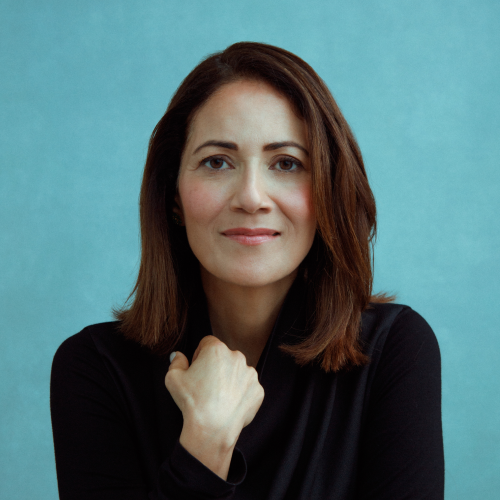
Mishal Husain is Editor at Large for Bloomberg Weekend.