Texas Ranch Lures Futuristic Startups to Revive US Manufacturing
The charismatic founders preach a gospel of reviving American manufacturing through frontier grit.
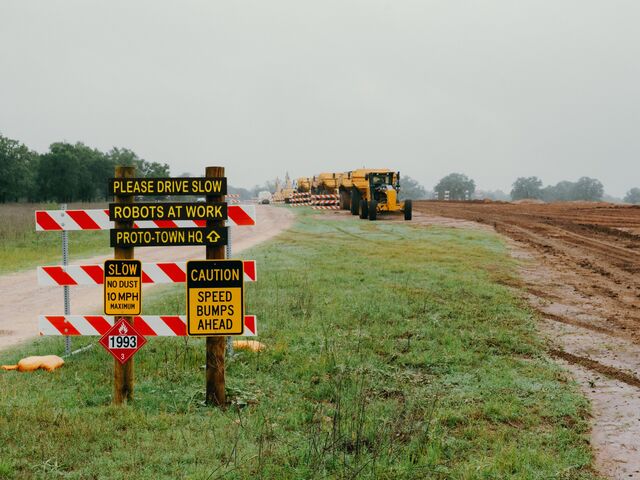
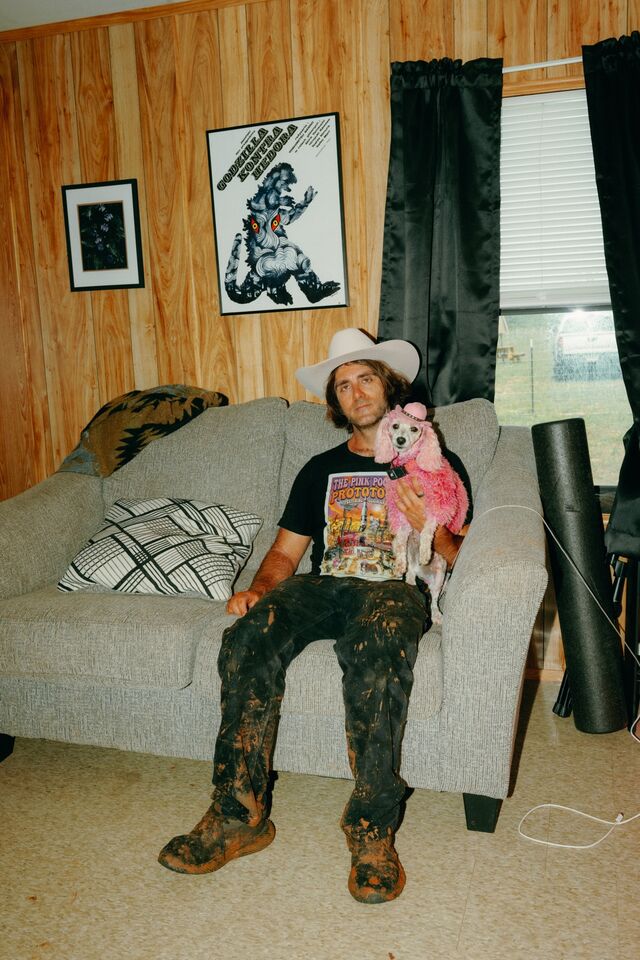
Since launching their startup incubator Proto-Town two years ago, Merle Nye and Joshua Farahzad have lured 12 companies to their sprawling Texas ranch to join an ecosystem of startups eager to build stuff — everything from autonomous bulldozers to drones the size of basketball courts.
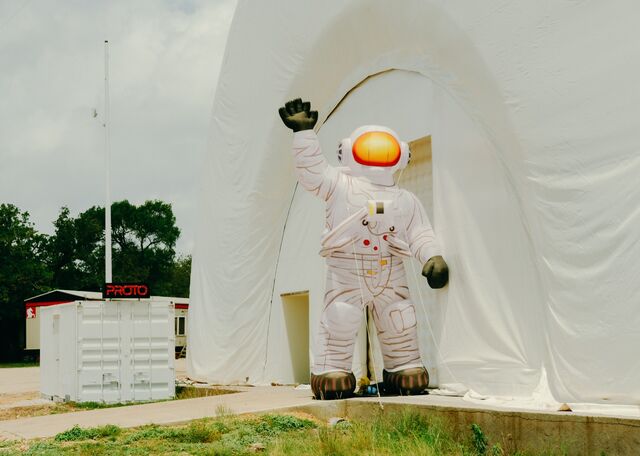
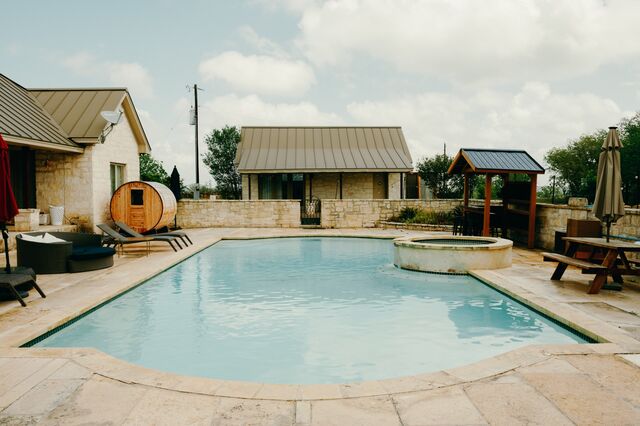
On a visit in April, just past a security checkpoint, Oklo Inc. was constructing a nuclear test reactor to generate isotopes for research, energy and medical uses. Nye, 28, zipped along crushed limestone roads in an electric four-wheeler, weaving around construction excavators and repurposed shipping containers. He parked outside an 11,000-square-foot inflatable office space at the center of the 1,200-acre (485 hectares) ranch in Lockhart, a town known for barbecue about 40 miles (65 kilometers) south of Austin.
In Silicon Valley, accelerators like Y Combinator have long been the nursery schools of future software behemoths. Proto-Town — the name for both the ranch in Texas and the company that manages it — aims to provide a similar environment, but for hardware companies.
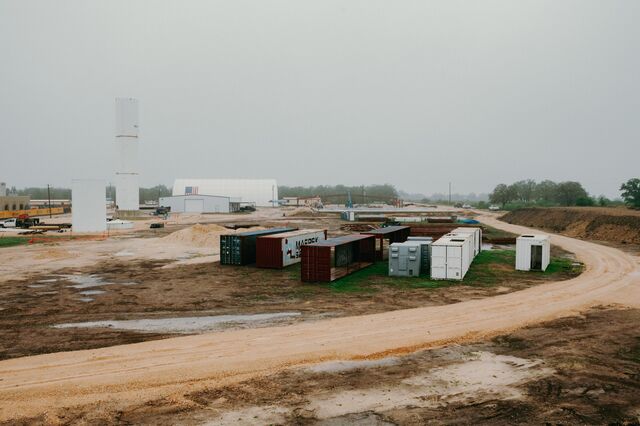
It’s a response to a growing sense among technology entrepreneurs and investors that the US needs to revive manufacturing, and that tech centers like Silicon Valley are too restrictive and too expensive for the job.
“It filters for people who really want to put their heads down and figure out their product or company,” Nye said. “You’re so unconstrained in terms of the physical space out here that you can think in a different pattern than you could in a warehouse in the middle of a city.”
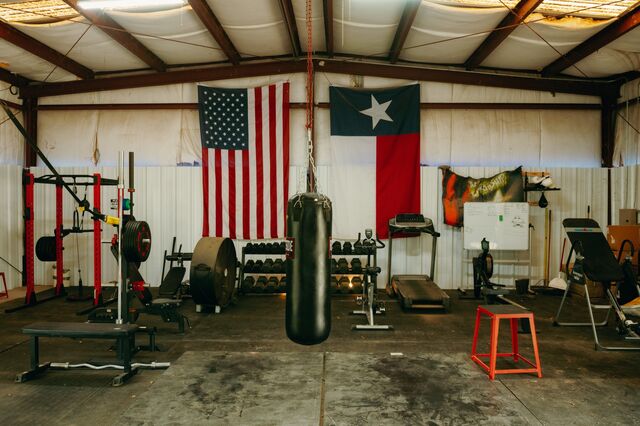
By co-locating machine shops, office space, testing grounds, manufacturing facilities and housing, Proto-Town aims to ease the process of getting a business going. Nye drew parallels to Shenzhen, the famous Chinese manufacturing hub.

It also has elements in common with the billionaire-backed futuristic community California Forever, which is planning to build the largest defense-focused industrial manufacturing park in the US outside the San Francisco Bay area, though Proto-Town has avoided the community pushback that has stalled the California startup city. In August, Proto-Town struck a development agreement with Caldwell County that set minimal ground rules for building on the ranch. In return, it exempted the site from any future development regulations the county might pass.
Proto-Town’s seed investment round raised $20 million from backers including billionaire hedge-fund manager Bill Ackman, Thrive Capital’s Josh Kushner and Coinbase Global Inc. co-founder Fred Ehrsam. The business employs about 20 people and invests in some of the companies on campus, pairing a venture capital portfolio with its real estate holdings.
Farahzad, 26, got the idea for Proto-Town a few years after dropping out of Duke University. He picked Austin mostly based on vibes and its status as the home base of Elon Musk and Tesla Inc., then went to work pitching investors on a hardware manufacturing hub in the heart of Texas.
He purchased an old school bus, painted it red and drove it 60,000 miles around the country raising money for Proto-Town. In the midst of all this, he persuaded Nye, who he had met at Duke, to join the venture.
The pitch “was something along the lines of like, if you’re going to die one day, you should live trying crazy things,” Nye said.
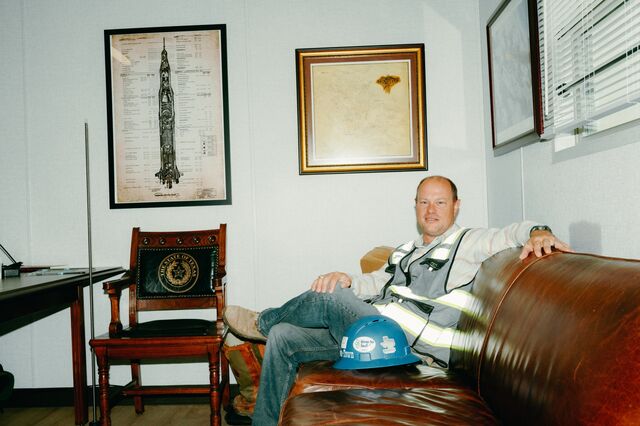
Farahzad also brought on John Cyrier, a Republican representative in the Texas House who was preparing to leave the legislature. Cyrier, 52, had recently sold his general contracting business but wasn’t ready to retire, and he had local connections the younger founders didn’t.
During his time in office, Cyrier worked with Musk’s Boring Co. and Neuralink Corp. as the entrepreneur built out a company town called Snailbrook in Cyrier’s district.
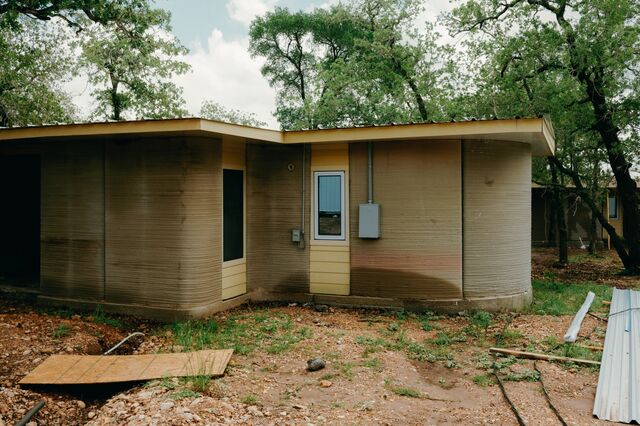
A residential developer that owned property neighboring Cyrier’s ranch offered to rent its land, and Proto-Town began building it out. Proto-Town has since purchased about 100 acres and leases the rest from the developer.
The founders spent their weekends prowling Facebook Marketplace for furniture. They dodged scorpions as they slept on the floor and debated spending money on an exterminator or fixing the air conditioning.
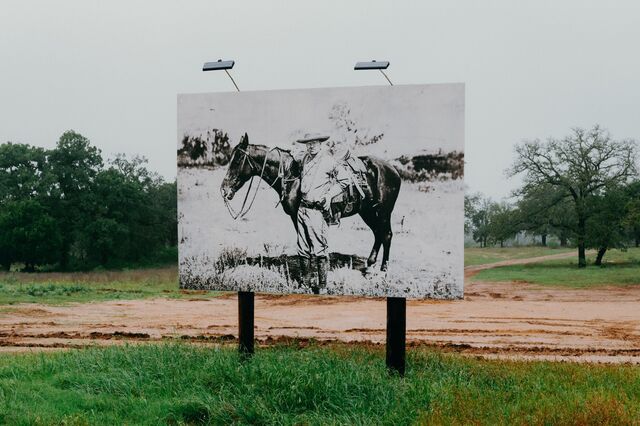
The first pieces of decoration installed on the ranch were three billboards with photographs of J. Robert Oppenheimer at Los Alamos, Theodore Roosevelt and the Wright Brothers. They reflect a rosy view of American history that has become a foundational principle at Proto-Town: The US was a nation of cowboys and innovators, but it has lost that edge, particularly in building big things.
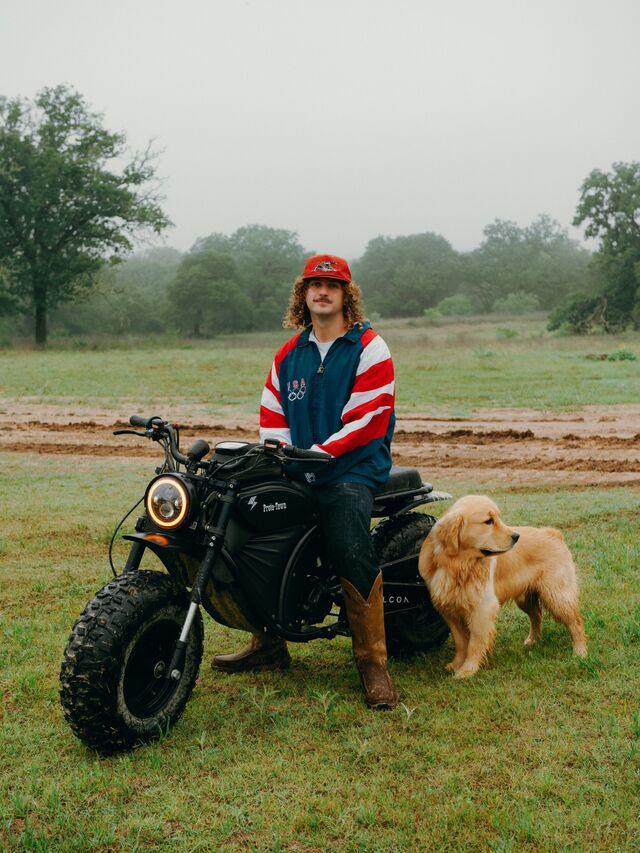
Many adherents of that view in Silicon Valley have aligned themselves with the Trump administration, but Farahzad says Proto-Town is apolitical, attempting to return to the “timeless virtues that made America really dynamic.”
Oklo broke ground on the test reactor in September and plans to turn it on in July, according to Chief Executive Officer Jake DeWitte. He credits that speed in part to Proto-Town’s environment, where he can “just go faster.”
“We will have gone from a greenfield to a reactor splitting atoms in less than 10 months,” he added. “That’s insane. That’s Manhattan Project-era speed.”
Scattered across the grounds are companies like Bedrock Robotics, founded by ex-Waymo engineers, which is building autonomous construction technology and recently raised $280 million at a $1.75 billion valuation.
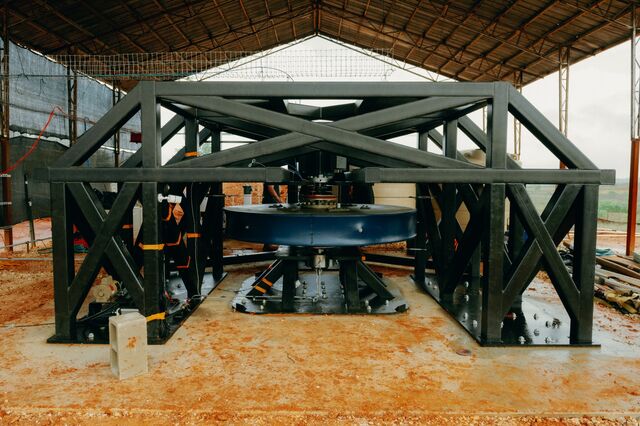
Nearby, in a shipping container retrofitted with air conditioning, stands the headquarters of Dynamo. Founder Ethan Blagg wants to build gigantic drones capable of lifting heavy materials like generators and telecom towers. It is still a ways from that materializing: The company is building prototypes one-seventh the size of the final product.
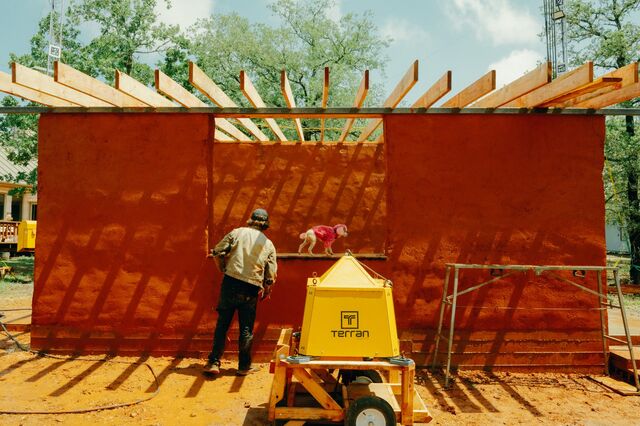
On the other side of some walking trails, home construction company Terran Robotics tested a robotic hammer that pounds dirt into adobe homes. Over lunch, Terran employees ate cod and green garbanzo beans with workers for energy startup Base Power, which experiments with batteries at Proto-Town.
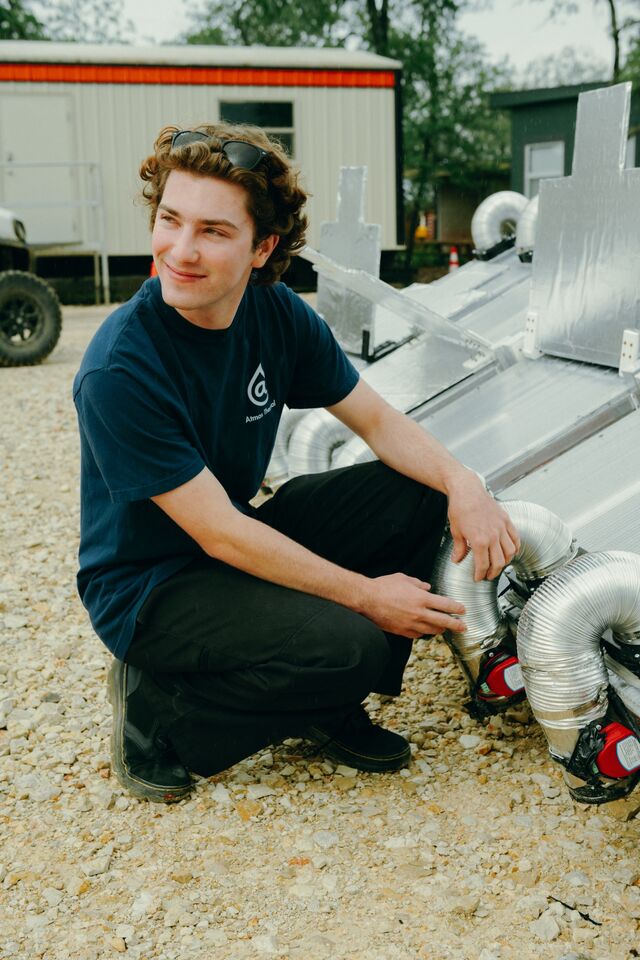
Evan Lipofsky, a 22-year-old dropout from the University of California, Berkeley, visited Proto-Town in March 2025. One month later, he backed a U-Haul into the entryway of the inflatable office building and began unloading his gear. His company, Atmos Thermal Systems, makes solar-powered cooling panels. He loves the atmosphere.
“There’s hardware and there’s real people,” Lipofsky said. Here “it’s not just LinkedIn and fake buttons that you’re clicking.”