Weekend Edition
The Arctic Paradox
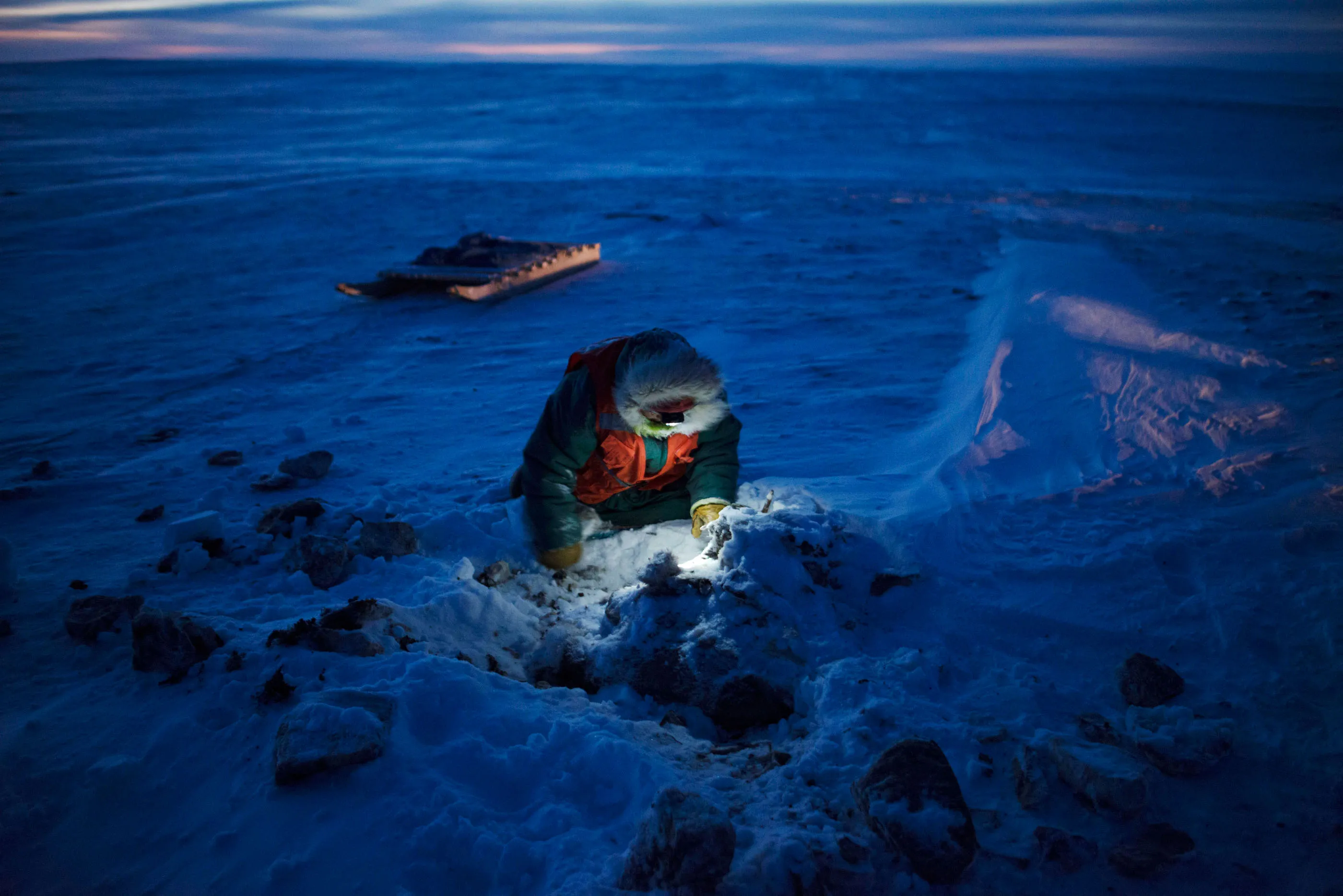
What do you see in this photograph?
A sea of ice. Day overlapping with night. Isolation, beauty, bitter cold. Exactly what you’d expect in Canada’s Arctic archipelago. But look more closely, and you can see something else: technology, developed through centuries of adaptation to one of Earth’s most extreme environments. This Canadian Ranger, photographed near Gjoa Haven, Nunavut, in November 2019, wears a parka, the life-preserving outerwear invented by the Arctic’s Indigenous peoples. In the shadows behind him sits a komatik, a sturdy but flexible sled held together with bindings rather than screws, allowing it to handle the rough, icy terrain. He’s digging up caribou meat, buried there months earlier to ferment in the cold earth.
We have traveled to the Arctic multiple times over the past three years; Louie, raised in Canada, has been going there for three decades. Wherever we’ve been — embedded with conscripts practicing for a future war in Lapland, or listening to Yu’pik elders battling a fishing crisis in off-the-grid Alaskan villages — we’ve observed the same thing again and again: a wide gap between what is imagined about the Arctic and what is actually there.
This year’s crisis over President Donald Trump’s desire to “own” Greenland was a case in point. The kernel of truth, that Greenland’s location makes it critical to US missile-interception ambitions, was drowned in a sea of misconceptions, with not just the White House but also mining prospectors portraying the Danish territory as a tabula rasa awaiting easy exploitation by the United States. The episode laid bare the pressing need for better understanding of the realities of the region — including basic appreciation for logistics and costs in a vast, rugged land, as well as the perspectives of its inhabitants.
In his book Arctic Dreams, Barry Lopez wrote that “people’s desires and aspirations were as much a part of the land as the wind, solitary animals, and the bright fields of snow and tundra.” The images that follow, drawn from our recent reporting trips and Louie’s extensive archive, aim to set those dreams — along with the infrastructure and effort they require — within the foundation of the Arctic’s land, sea and sky.
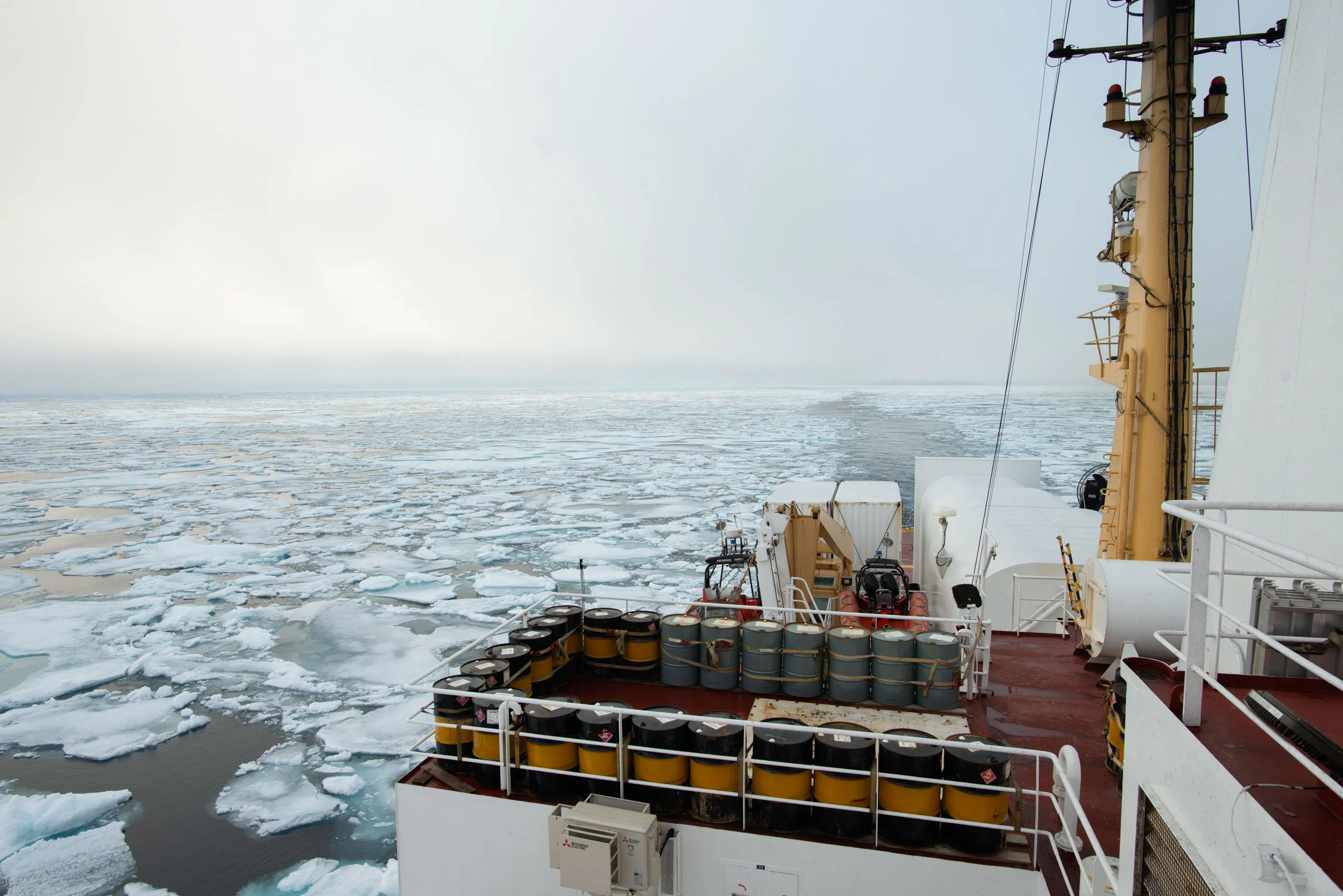
The Arctic offers a strategic shortcut — except for its impenetrable ice. The Northwest Passage, linking the Atlantic and Pacific Oceans through Canada’s northern archipelago, has for centuries drawn explorers, sometimes to their doom. Climate change has rekindled dreams of newly ice-free summer sailing routes among navies and merchant shippers alike. But they will confront the reality of a treacherous set of channels made more, not less, unpredictable by rising temperatures. This icebreaker and scientific research vessel, the CCGS Amundsen, navigates the passage in August 2018.
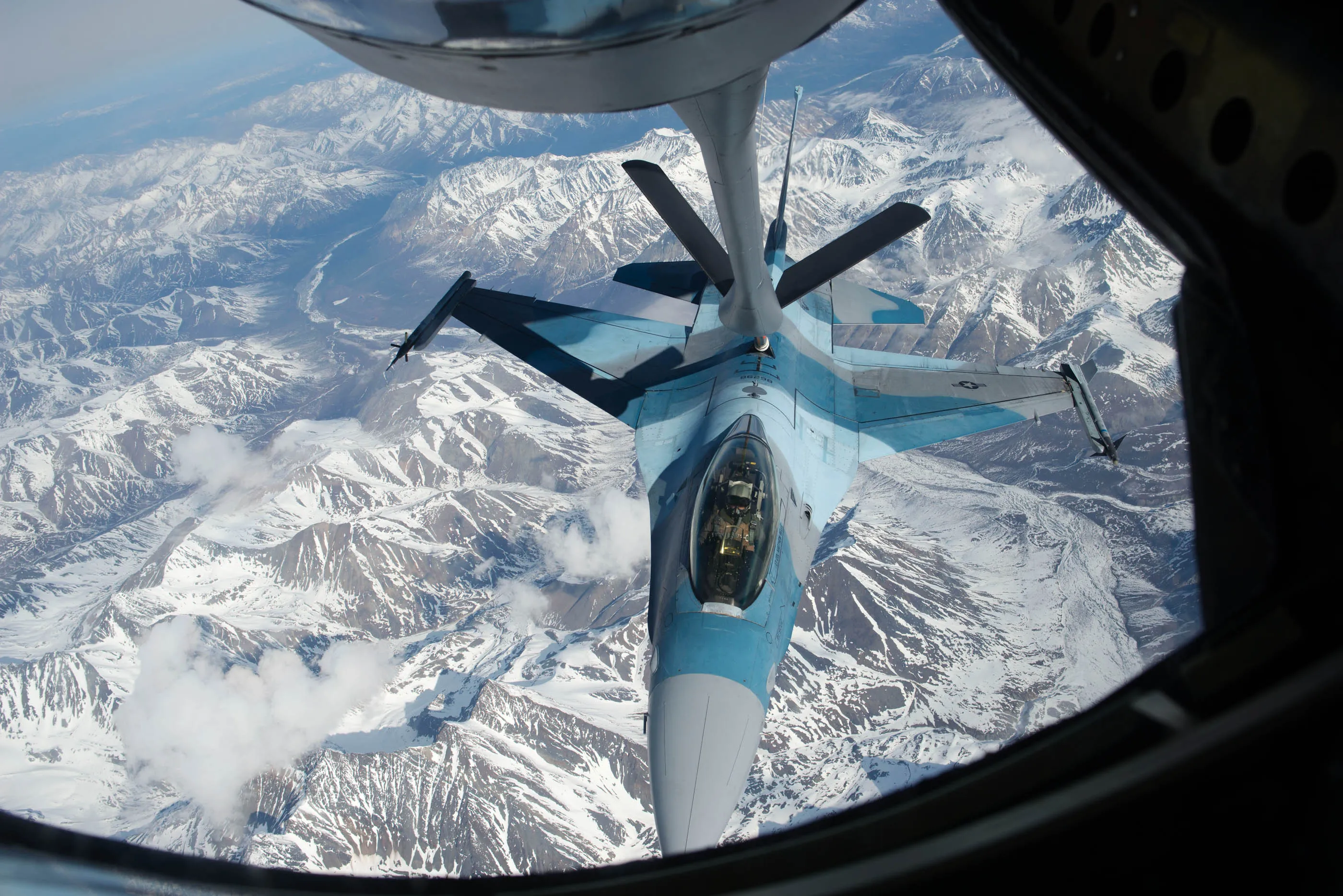
Washington typically worries less about threats to the Arctic and more about threats through the Arctic. The region has long been viewed by US strategists primarily as a flight path for Russian (and Chinese) missiles and aircraft targeting the lower 48 states. That is compounded today by threats of hypersonic missiles, drones and hybrid warfare. Here, a US fighter jet painted in enemy colors for training purposes is refueled midair over Alaska in May 2017.
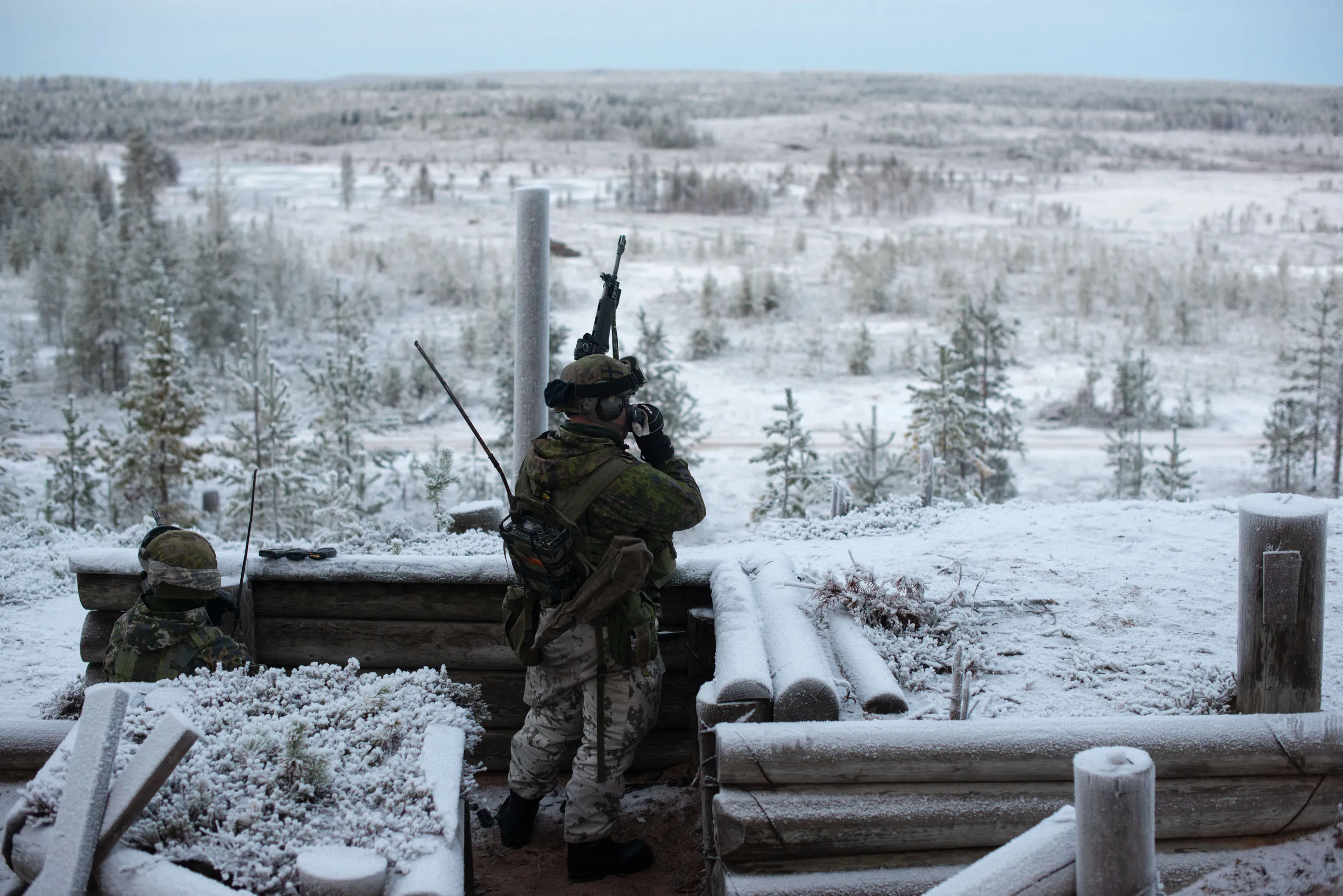
Militaries have an outsized presence in the Arctic, not just for defense purposes but also for logistics and search-and-rescue. Only a few large-scale military engagements have actually taken place there, all during World War II. The most prominent were Finland’s various conflicts with the forces of both the Soviet Union and Nazi Germany. Today, with tensions rising across the Arctic, one of the likeliest potential flashpoints is Lapland, where this Finnish conscript trains for anti-tank warfare in November 2025.
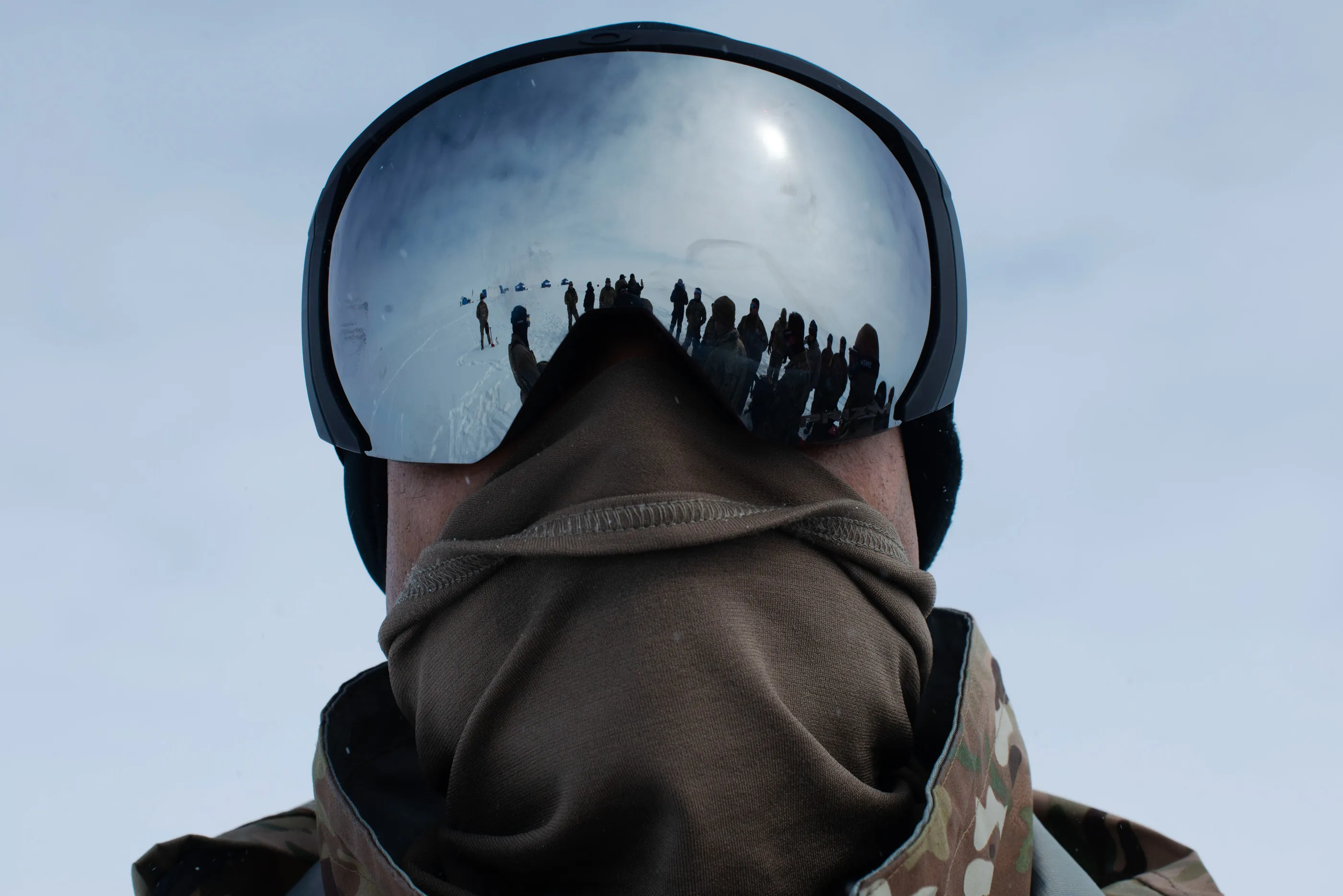
The US already bases soldiers and military infrastructure in Greenland under a treaty signed with Denmark in 1951. Washington even once considered housing nuclear missile silos under the ice cap. Reflected in Master Sergeant Poitier Wright’s snow goggles, New York Air National Guard personnel undergo Barren Land Arctic Survival Training — BLAST — 7,000 feet (2,133 meters) above sea level at Camp Raven on the Greenland ice cap in May 2023.
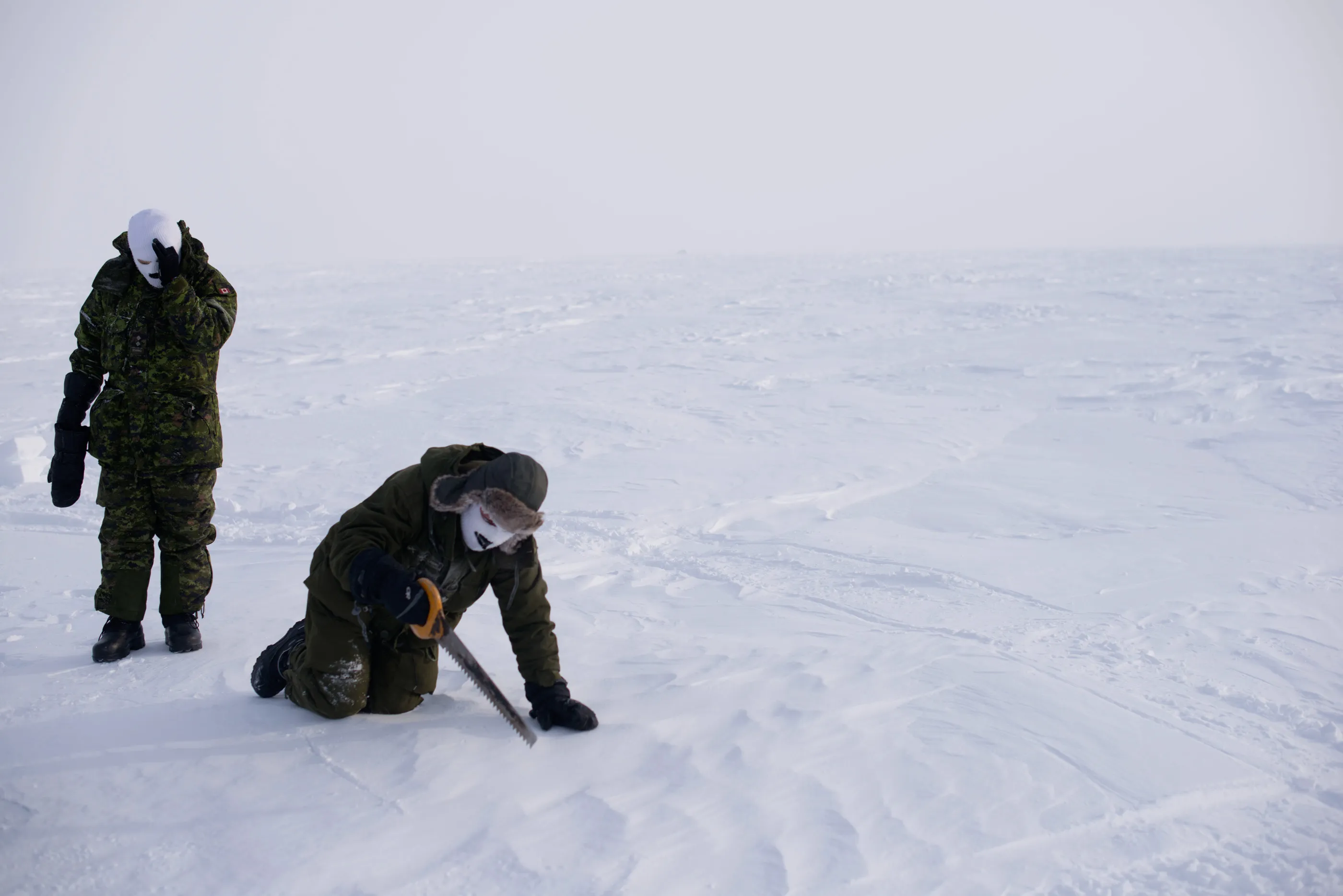
The US, Russia and China are now engaged in an Arctic arms race. But on the ground, or ice, nothing happens quickly there. Nature dictates the schedule, and things can go wrong very quickly at -60F (-51C), forcing a methodical approach to everything from positioning your goggles correctly to managing your sweating (sweat freezes). Survival techniques chew up time. These Canadian soldiers were testing ice for building blocks near Sanirajak, formerly Hall Beach, in Nunavut in February 2017.
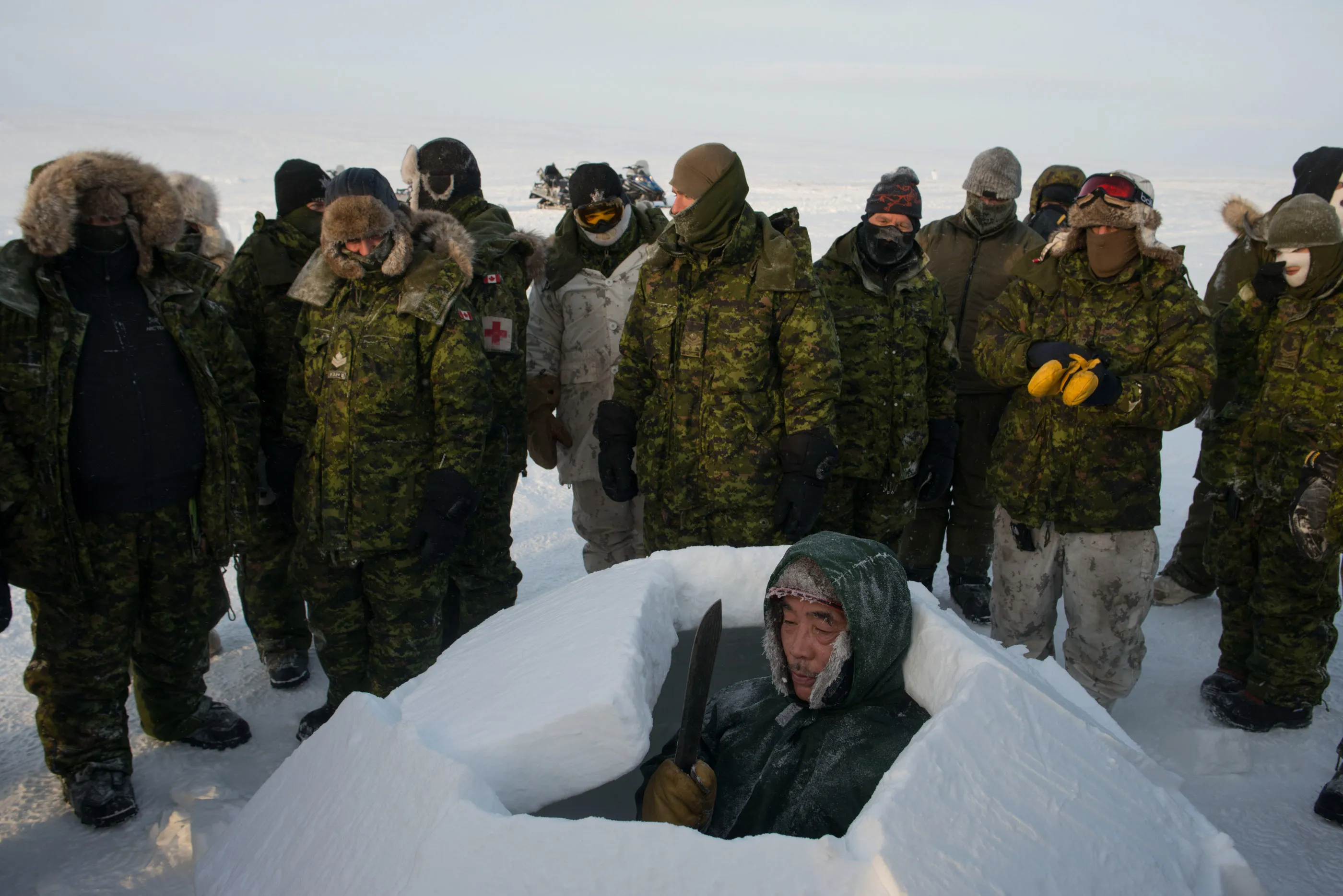
Basic survival is the priority, and the Arctic’s indigenous peoples, like this Inuit Canadian Ranger, are masters of the craft. “They know how to un-f**k themselves better than anybody,” a visiting US Army major told us admiringly during a 2024 visit to Canada’s remote outpost of Resolute Bay. Louie photographed this Ranger teaching igloo-building to soldiers on an earlier visit in March 2018. In winter warfare, just getting out of the wind can mean the difference between life and death.
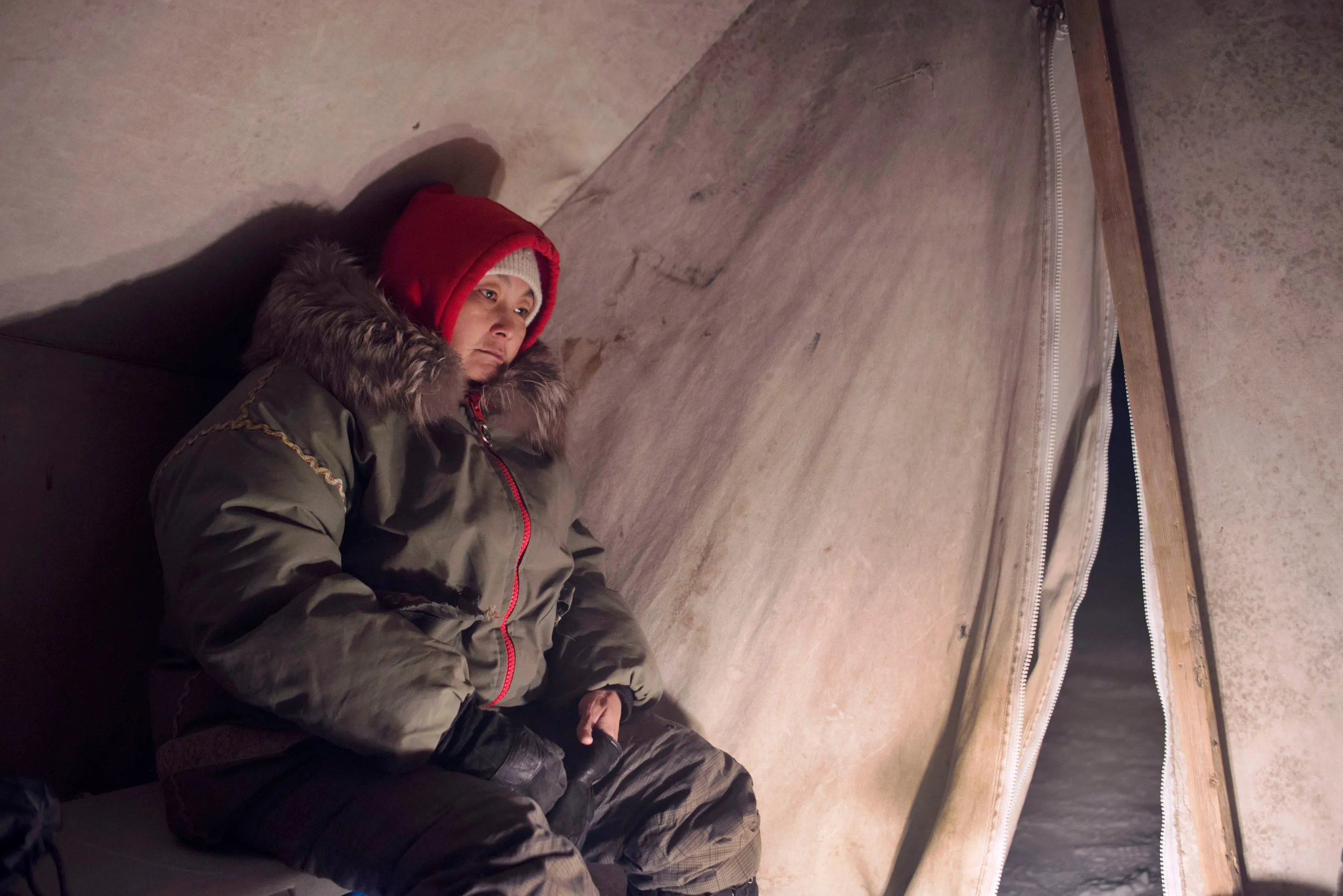
In Mary Shelley’s Frankenstein, one of the great works of Arctic literature, the monster flees toward the North Pole to escape human cruelty. Isolation is inescapable in the Arctic’s vast expanse. Even when enjoying the relative comforts of a military base there, the winter’s long hours of darkness, the monotonous, indifferent landscape and the immense distance from home corrode morale. Here, Master Corporal Susie Hiqinit rests on a multi-day Canadian Ranger patrol in the wilderness near Gjoa Haven, Nunavut, in November 2017.
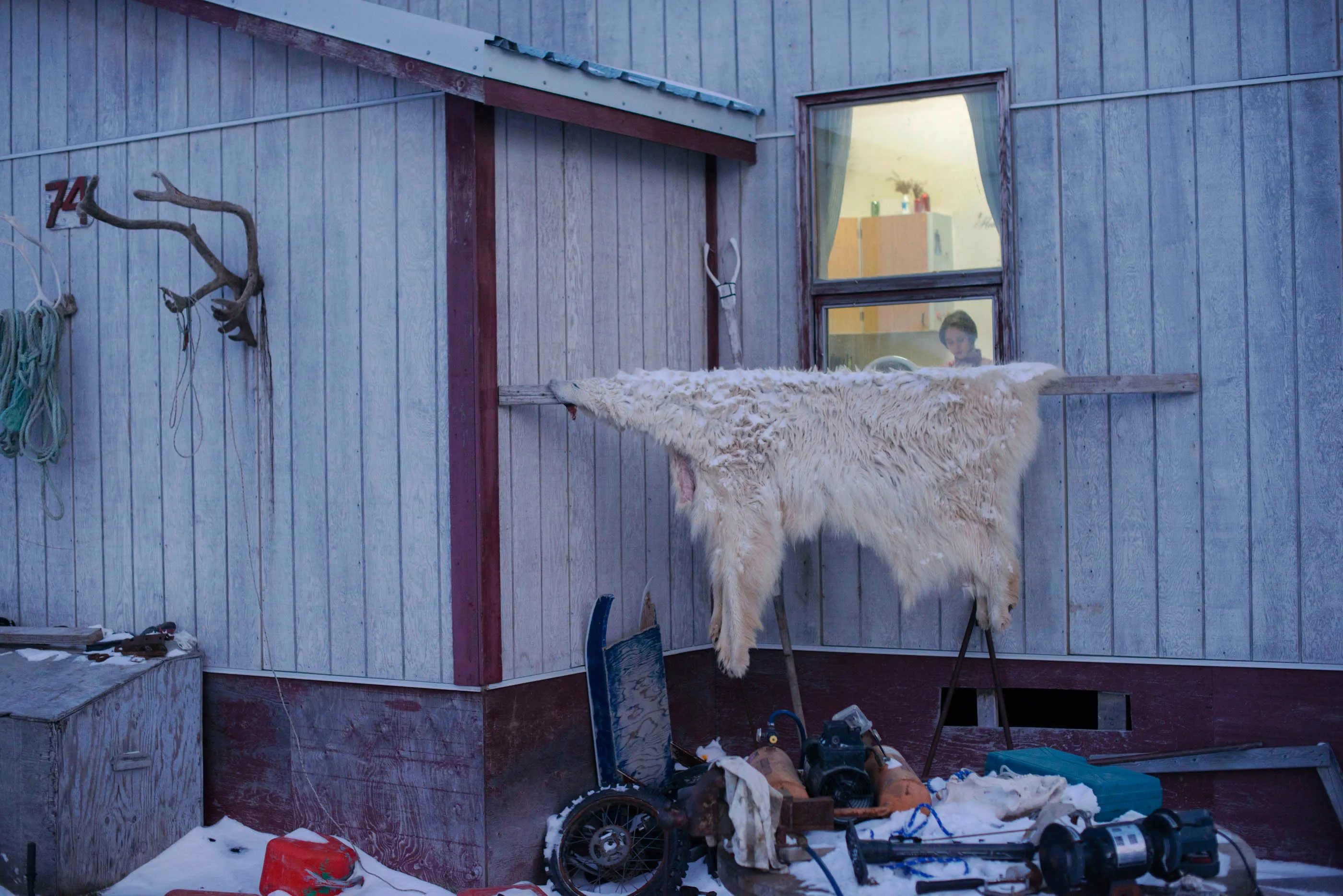
Settlements in the North American Arctic are usually off the grid. Subsistence hunting and fishing isn’t just a means of connecting with the past there; it’s how you must live in places where supplies have to be brought in by boat during the brief summer weeks of open water, or flown in at huge expense. Front yards can look like junk piles, but those are actually stores of spare parts for reuse or bartering. The polar bear skin hanging outside this house in Clyde River, Nunavut, photographed in October 2016, seems exotic to outsiders but is more like laundry drying for its inhabitants.
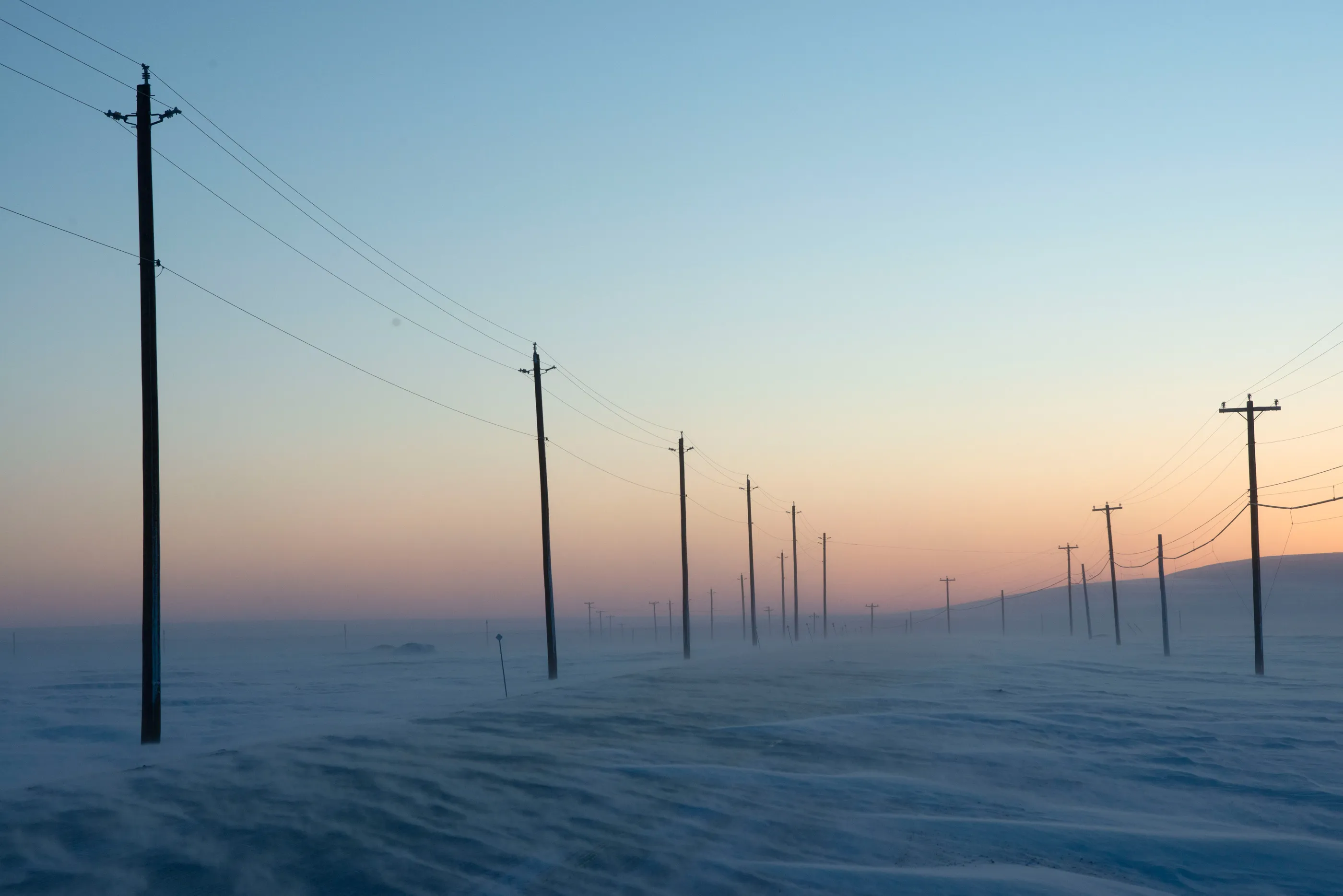
A somewhat grim Arctic irony is that the fastest-warming region of Earth also relies heavily on fossil fuels, which are relatively easy to store and transport during the summer and work reliably in cold, dark conditions. Diesel is used widely, including at the power station that feeds these wires, which run into the village of Resolute, Nunavut, pictured here at dusk in March 2024.
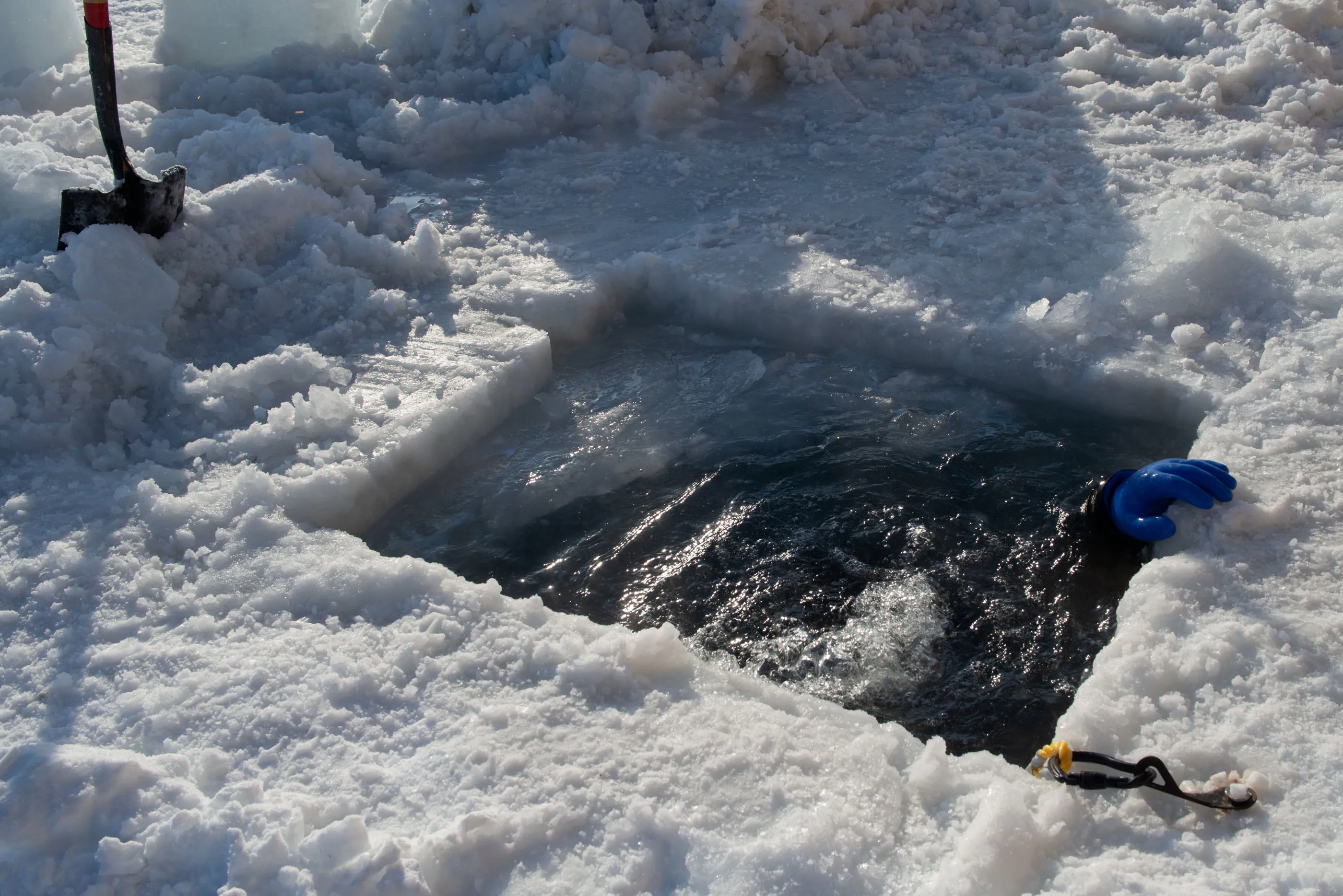
In militarizing or industrializing the Arctic, humanity strives to shape a place that is intensely hostile to our presence. Indigenous nations carved out a niche for themselves there, but they did so over thousands of years. Our present era of Arctic mastery seems highly contingent by comparison. Here, a US Navy diver gets a handhold above the freezing water at an ice camp on the Beaufort Sea in March 2018.
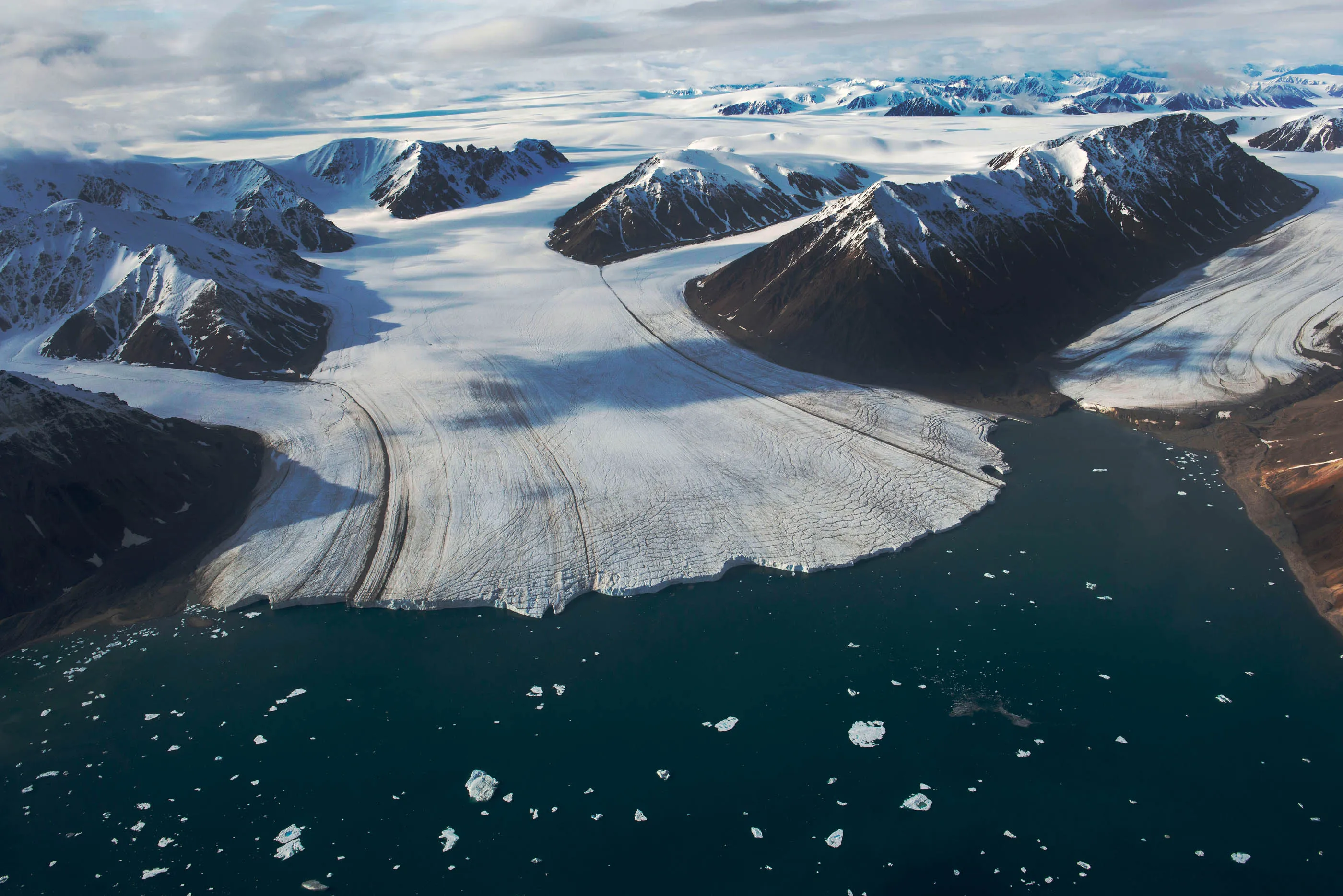
There’s a troubling paradox in all these images. The Arctic’s harsh grandeur dismisses the ambitions of politicians, generals and industrialists seeking to control it. The scale of this glacier, fed by the Manson icefield on Ellesmere Island in the Canadian archipelago and pictured from an aircraft in August 2018, is awe-inspiring. But such glaciers are vulnerable now, with Canada’s losing mass at a rate “unprecedented over several millennia.” Humans from beyond the Arctic Circle are imposing their will on Earth’s last frontier in the most far-reaching, and self-defeating, way possible.
This essay was supported by the Pulitzer Center.