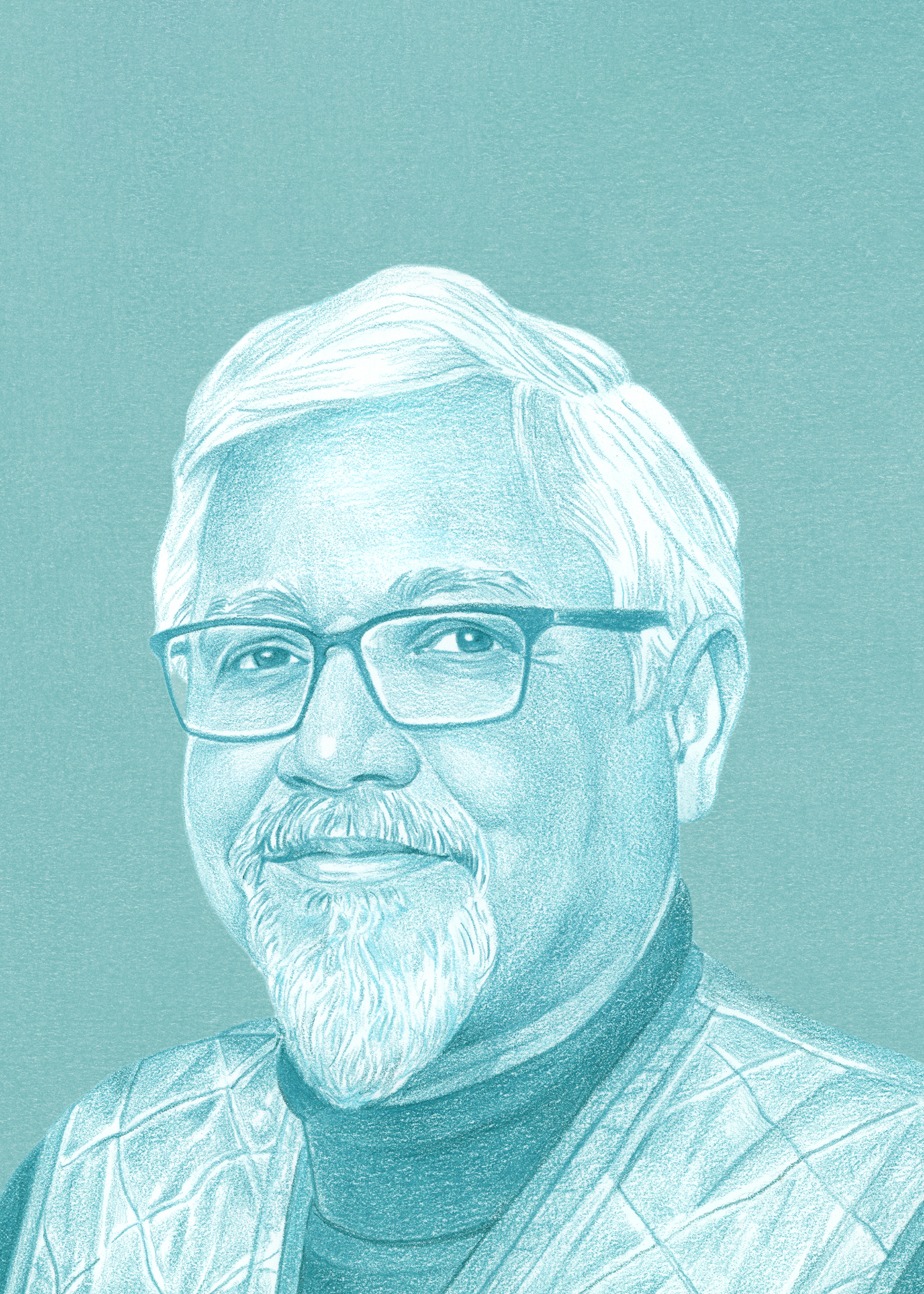
Amitav Ghosh on India and the Emergent World Order
The Kolkata-born novelist discusses writing at a time of crisis, exploring past lives and making the US his home.
For more than 30 years, Amitav Ghosh has built a global following with novels that draw on deep historical research. He’s set stories amid the 19th-century opium trade and in the environmentally threatened Sundarbans, near his native Kolkata. But his latest, Ghost-Eye, is more esoteric. Featuring a child who shocks her vegetarian family by claiming a past life where she ate fish, the novel explores dynamics of ecology and capitalism, from India to New York City. As Ghosh reveals here, it’s also deeply personal.
This conversation has been edited for length and clarity. You can listen to an extended version in the latest episode of The Mishal Husain Show podcast.
There’s a part early in Ghost-Eye that made me wonder how autobiographical this book is. Your protagonist says his childhood memories of India came flooding back in the “lockdown days” of pandemic-era New York. Was that the case for you?
Yes, very much. Writing this book helped me reconcile various things I’d never thought about before.
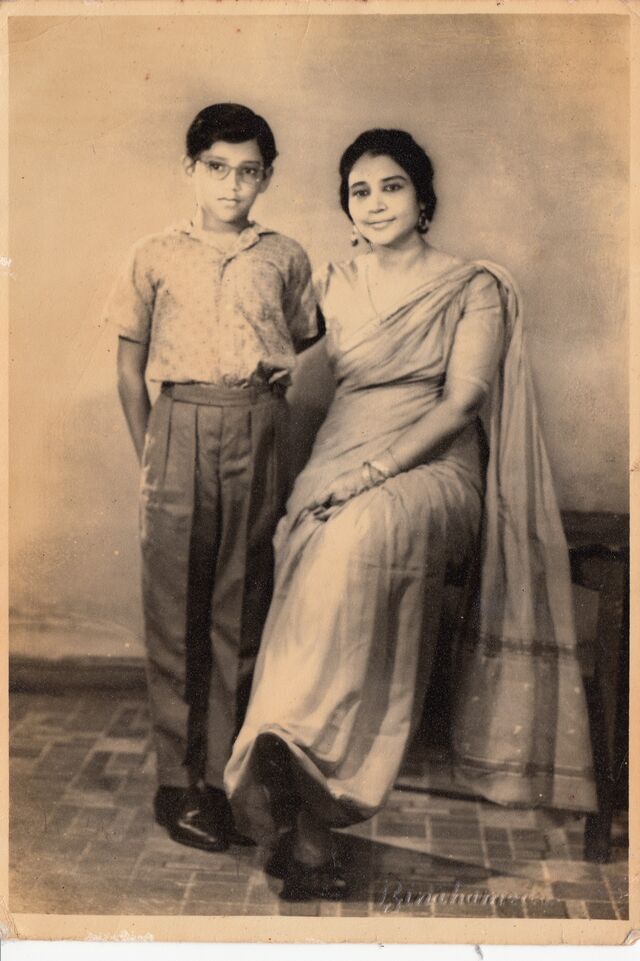
I was in Kolkata in January 2020, and my mother was very sick. She was someone who had very strange perceptions of things; odd things would happen around her. One day when she was in hospital — in front of my eyes — she had a near-death experience. Watching her describe what she was seeing on the other side really unlocked something for me.
First, she said goodbye to me in the same way and tone that she used to when I was going off to boarding school. Then her head snapped back and she began to toss from side to side. She was telling me in Bengali what she was seeing: There was a light, people coming towards her — welcoming figures. She was not at all afraid.
Then suddenly, a doctor came in, gave her this injection, and she came out of it. But you know the first thing she said when she came out of it? Why did you bring me back? I wanted to go. It was my time.
There’s a scene exactly like that in the book, so it obviously stayed with you. 1
1 In Ghost-Eye, the scene involves the protagonist’s aunt, but as Ghosh spoke of this experience with his mother, I realized that the book was much more directly linked to his own life than I had imagined.
Oh yeah, very much. I began to realize that very strange things happen — inexplicable things — and that’s the beauty and miraculousness of this world.
A theme in Ghost-Eye is reincarnation and a child who’s born with memories of a past life. How long has that been percolating in your mind?
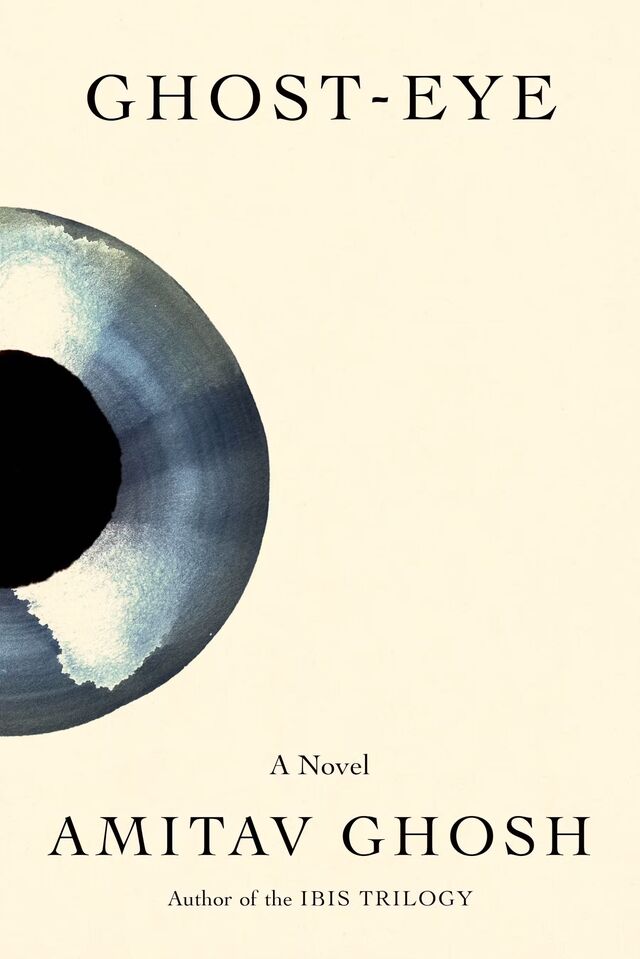
For a long time. In fact, I touched on it in an earlier book, The Calcutta Chromosome.
I don’t like to use the word reincarnation, because you are implying there’s a whole cycle of karma and so on. Maybe that exists. I just don’t know about that. I’m agnostic.
What I do know is that a very large number of children are born with past-life memories. Since this book came out, I’ve been contacted by dozens and dozens of people. There are a lot of inexplicable things, like children being born with knowledge of another language. 2
2 Ghost-Eye also features a character based at the University of Virginia, which in real life has a Division of Perceptual Studies, founded in 1967. The research group says it has gathered more than 2,500 “cases of the reincarnation type” and is “devoted to the rigorous evaluation of empirical evidence for extraordinary human experiences and capacities.”
Is that not people’s perception, or artifice, or children putting it on? There’s no doubt in your mind that the phenomenon is real?
No doubt whatsoever. The people who’ve told me about these experiences and memories — they’re friends and I trust them. What incentive do they have to lie to me?
Watch the trailer here.
I don’t mean lying. Sometimes perception does lead us to believe or see certain things. I’ve always been struck by how deeply researched your novels are. I’m wondering if you’re doing something different in this book — asking us to suspend disbelief and step into a different world.
Yes, very much so. One of the things that’s gone really wrong is that, because of the mechanistic ways in which powerful people think about the earth — that it’s just a machine, it’s inert, everything in it can be known by science or engineers — the world has lost all its wonder and mystery. That’s why Elon Musk wants to leave our poor, exhausted world and go to Mars.
Our earth is infinitely mysterious, and I feel that we know almost nothing about it. Science is great, but you can’t use a hammer for every job. 3
3 Ecological change has been a notable theme in Ghosh’s recent fiction and nonfiction. “The weight of aid money often allows Western experts to ignore or silence indigenous voices,” he writes in a recent essay I found thought-provoking. Among other examples, he cites embankment construction and the introduction of saltwater farming as harmful to communities in coastal Bangladesh.
Your plot moves between Kolkata in 1969 and New York — now your home — in 2020. In the US, 1969 is evocative of the Vietnam War protests. In the UK, it’s when Northern Ireland’s Troubles entered a new era. What did 1969 mean to you as a 13-year-old in Kolkata?
I was mainly in boarding school in northern India. I was following the news very closely — Vietnam and so on — but also, it was a time when we had a huge exposure to American culture, through music most of all. It was the spectacle of what young people were doing in America. It’s very common for American politicians to say that people come here for freedoms and liberties, but in fact what the world found so attractive in that particular period was the counterculture. 4
4 The Indian political backdrop in 1969, when Ghost-Eye begins, includes a brewing crisis within the governing Congress party. “A still more ominous set of events, with even grimmer portents for the future, is unfolding in Gujarat,” Ghosh writes, referring to rising tensions and communal violence between Hindus and Muslims in the western state that year.
I’ve heard you say about Kolkata in that period that, while there was unrest and it was a politically tense time, there was also a flowering of culture.
Absolutely. If you look at the filmmakers working in Kolkata in the ’60s and ’70s, it’s an astonishing number of the great Indian filmmakers — most of all, Satyajit Ray, whose work I found incredibly exciting.

Get the Bloomberg Weekend newsletter.
Big ideas and open questions in the fascinating places where finance, life and culture meet.
By continuing, I agree to the Privacy Policy and Terms of Service.
Take me back to the story behind the unrest in Kolkata. What was the climate that surrounded you and how do you think it impacted the writer you became?
Kolkata was then a hotbed of Marxist activity — Maoists, Stalinists — and they were a very powerful presence. Political, but also intellectual. I never subscribed to those ideologies really at all, but you had to contend with it.
Kolkata [and] New York are like the opposite ends of the telescope. Kolkata is the antithesis of the modern world, at least it was in that period. New York is the heart of the modern world. It’s such a huge gap to bridge. 5
5 Ghost-Eye’s protagonist recalls 1960s Kolkata as plagued by power cuts, “just one aspect of the city’s tumult.” Daily strikes and marches made life unpredictable and the city’s inhabitants were “always prepared for uncertainties, knowing that everything around us could be plunged into darkness at any moment.”
I’ve heard you say that there was something about growing up in such contentious times that put you in the mindset of thinking against the grain.
Absolutely. Growing up there at that time, you learned to be very critical, very skeptical of everything. That stayed with me forever.
You are a writer connected to everyday events, and to present-day politics — I can see it from your X feed, where you’re reposting multiple times a day. How much does it bleed into your fiction? Do you have to work to separate yourself from the real world?
Yes, I really have to create a kind of little bubble of tranquility in order to be able to write.
That’s becoming harder and harder — impossible now, I would say. Before, we were writing about planetary crisis, political crisis, geopolitical crisis. Now, we have to write from within the crisis. That completely changes your perspective. 6
You have to write from the point of view of the reality of our time; and it’s a time of absolute disruption.
6 In a Weekend Interview in February, Ukrainian writer Andrey Kurkov echoed this sentiment, telling me how difficult it was to write fiction after the February 2022 Russian invasion. “Writing fiction is a pleasure,” he told me, one that requires a separation from reality for several hours a day. “This was impossible.”
You don’t just mean climate, do you? You mean the state of the world, the war with Iran? All of these things are exercising you.
Very much so. I wrote a book called The Nutmeg’s Curse, and there I said the mistake Western experts make when they think about the climate crisis is they think of it as a technological and scientific crisis, whereas in fact it’s a geopolitical crisis.
It’s a crisis that’s tied to the fossil-fuel economy, which in itself is the underpinnings — and has been for 200 years — of the Anglo-American empire.
Are you saying there’s a link between that and Iran?
It’s completely straightforward. The reason why Anglo-America has to try and retain control of the Strait of Hormuz is to control the flow of fossil fuels. 7
7 “Oil is a constant,” former US negotiator Wendy Sherman told us recently in relation to the CIA and British intelligence orchestrating the overthrow of Iran’s prime minister in the 1950s. In recent weeks, Iran has asserted control of the Strait, a critical waterway for international shipping.
How closely are you following how India’s been affected economically in this period?
People are desperate to find gas. Most of the cooking that’s done in India is done with canisters of natural gas. The situation is really very bad and it’s getting worse. The government, unlike China, didn’t stockpile enough quantities of fuel. So India is very vulnerable at this particular point. 8
8 India’s most acute shortage is in cooking gas. Supplies of liquified natural gas and crude oil are less dependent on the Middle East — and cargoes from Russia and Iran have helped minimize shortages — but prices have still risen.
India has not been diplomatically active in this period, it would seem.
What can you say? India has completely lost its way diplomatically within the region and it’s very hard to see how it can get back on track.
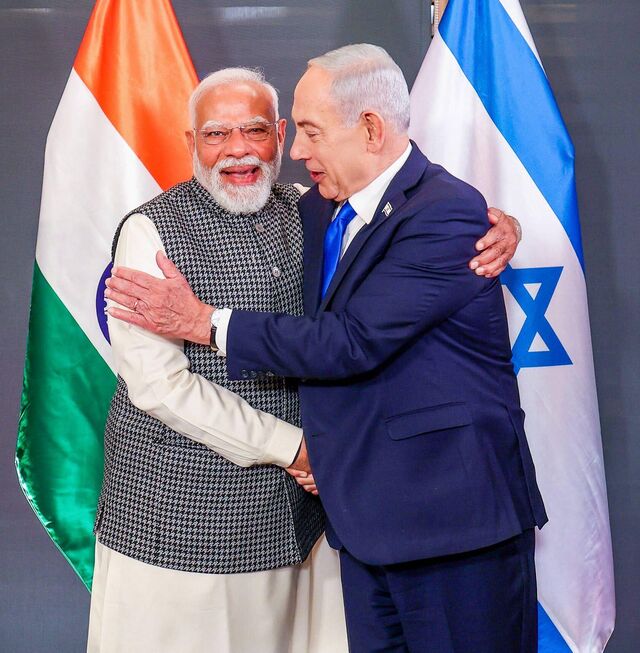
Just a few days before this conflict started, Indian Prime Minister [Narendra Modi] was in Israel, literally hugging [Prime Minister Benjamin] Netanyahu. 9
9 “India is too close to Israel for Iran to trust it enough,” Mihir Sharma argued in a recent Bloomberg Opinion piece. “But not close enough to avoid the humiliation of being blindsided by a war starting hours after an official visit.”
How would you describe your relationship with both India and the US — where I presume you feel much more at home today?
One doesn’t live in a large country like the United States, and India, as if you were geographically spread across the entirety. I’m from Bengal. In Bengal our views are often very different from, especially, northern India. I live in New York, in Brooklyn. I have for my mayor [Zohran Mamdani], a boy I’ve known since he was a kid.
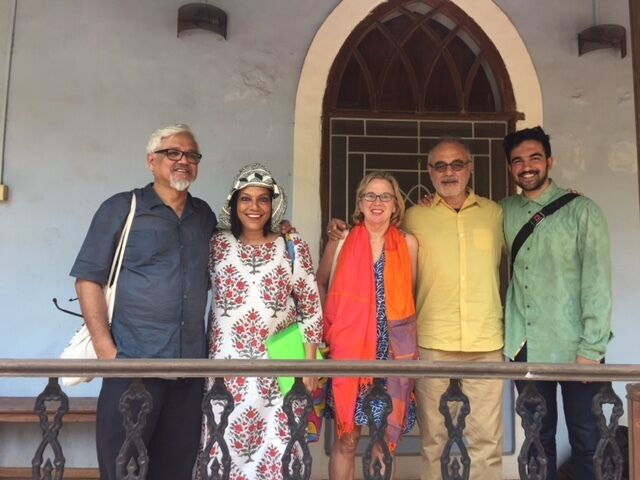
You know his mother, Mira Nair?
Mira is one of my oldest friends. We went to college together in New Delhi. 10
10 Nair is an Indian-American director whose debut film, Salaam Bombay!, was nominated for an Oscar in 1989. The haunting exploration of street children in Mumbai remains a favorite of mine alongside Nair’s Monsoon Wedding, which moves between dark secrets and the joy of a celebratory family gathering.
Did you ever think the child you knew might go into politics?
In our circles, it’s so rare for anyone to go into retail politics. I never would have guessed he’d turn out to be a political phenomenon — a genius, in a way. He just hits such a chord with young people.
Of course we knew that Zohran was charismatic. He spoke well. He’s got that killer smile. What really surprised me, though, is how competent he is. Every day he unveils some new thing. 11
11 Last month, Mamdani marked his first 100 days in office after a campaign centered on affordable housing, free buses, universal childcare and city-owned grocery stores. His early achievements have relied on buy-in from New York Governor Kathy Hochul, who has agreed to fund limited free childcare and aligned with the mayor on taxing high-end second homes. Mamdani highlighted the latter proposal outside a $238 million apartment owned by Ken Griffin, whose hedge fund Citadel then warned it may reconsider a new office development in the city.
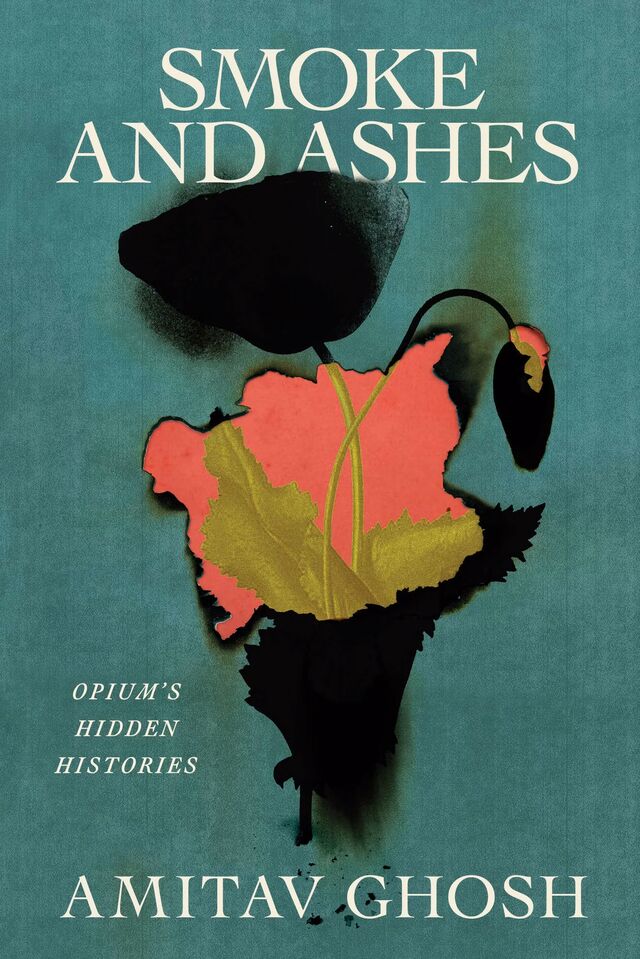
You’ve thought about India and China a lot, charting the opium trade through your novels. 12 Today, it feels like power is shifting; there’s a new world order developing. How do you think relationships develop?
12 Ghosh has written a trilogy of novels about the 19th-century opium trade, through which Britain exported the drug from India to China. He gathered his research into the nonfiction work Smoke and Ashes, in which he details the vast profits generated by addiction and how the trade created wealth from Singapore and Hong Kong to the US.
The problem for India goes beyond any one political party, or any one political figure. We are seeing an era of maritime power slowly declining and continental power slowly rising to the top. China, Russia [and] Iran are the three continental powers.
Within this, where does India fit? Its own geography puts it in this double bind, where it has to maintain very close relations with the maritime powers, and at the same time it has to try and maneuver within the new emergent order of continental power.
It’s a huge challenge for anybody to navigate that; and certainly the current dispensation is not proving to be at all good at it.
It’s interesting to hear you call Iran a continental power, rather than India.
India doesn’t really reach very deep into the Asian landmass. It’s cut off by the Himalayas. It’s this huge peninsula jutting out into the sea.
Pakistan, in some ways, maneuvered very well within this system.
It’s having a diplomatic moment, for sure. But in this climate, God knows how long that lasts.
Who knows? At least they’ve been able to take advantage of Chinese technology, whereas India has blocked [it], just like the US — look at those amazing Chinese cars that are everywhere now.
In the US, I feel sometimes that I’m going back to the India of my childhood, where we drove around in these 20-, 30-year-old cars and envied the West for having all these fancy things. Because of tariffs, et cetera, we are entering that same cycle. 13
13 Chinese carmakers are dominating the EV market in much of the world, though their reach into the US is limited by regulations, tariffs and national security considerations.
Yet this is the country you’ve chosen — of which you’ve become a citizen. Its freedoms represent something precious and important to you.
Absolutely. Also its culture of intellectual excellence. It may be sidelined very often, but I get to meet first-rate thinkers from across the world. That part — which has always existed, still exists and will continue to exist — is what holds me here, not to speak of my family and friends.
You’re in the process of contributing a manuscript to a project, which began in 2014, called The Future Library. Books are being put away until the year 2114. How hard was it to imagine what people would want to read in 2114? 14
14 Conceived by artist Katie Paterson, The Future Library will collate the work of 100 writers, including Handmaid’s Tale author Margaret Atwood. The final anthology will be printed on paper from trees grown over a century.
I think it’s perfectly evident that one of the factors really responsible for creating our planetary crisis is very short-termist thinking. We tend to think in four-year election cycles. This infects the literary and artistic worlds. There’s a pressure to keep up with the trend of the moment.
This project was thinking of time in a completely different way. In Native American culture, there’s this concept of thinking seven generations ahead — anything you do, you have to consider the seventh generation.
Having to produce a text for that has really been salutary for me. What can I have to say to a readership that’s not yet born?
Is it a full book? Fiction or nonfiction?
I don’t think I’m allowed to tell you. [Laughs]
How did you even start to think what your contribution should be?
The first thing you’re tempted to do is try and imagine the future world. I made many false starts and then decided that’s a fool’s errand.
If I think about how much the world has changed within my own lifetime — and that’s obviously accelerating — it’s impossible for any of us to have a sense of what the world will be like in 2114. You run the risk of making an ass of yourself, because people will open that thing and say, Oh, he was so completely wrong. I needed to draw on my own resources — say what I need[ed] to say.
You said how difficult it is to carve out time for your writing, away from the news. How do you actually do it? What have you learned?
Well, writing is all I’ve ever done and along the way I’ve developed certain disciplines. Over the last five or six years, I’ve written an awful lot, even as the world is falling apart around us. I write in a very complicated way. First I write by hand, then I start typing.
Your books start in longhand?
Yes, with a fountain pen. If I try to compose directly onto a computer, I find that it freezes me. Writing by hand, I feel more free. I can just follow my thoughts.
How much do you find the ultimate book changes from the original, handwritten one?
It changes a lot. Earlier books were unrecognizable.
With [Ghost-Eye] I had a very strange experience — like it came from outside myself. The book seemed to write itself. Usually, it takes me years to write a novel, but with this one, it was something uncanny.

Mishal Husain is Editor at Large for Bloomberg Weekend.