A guide to the people you’ll be hearing more about in the near future.

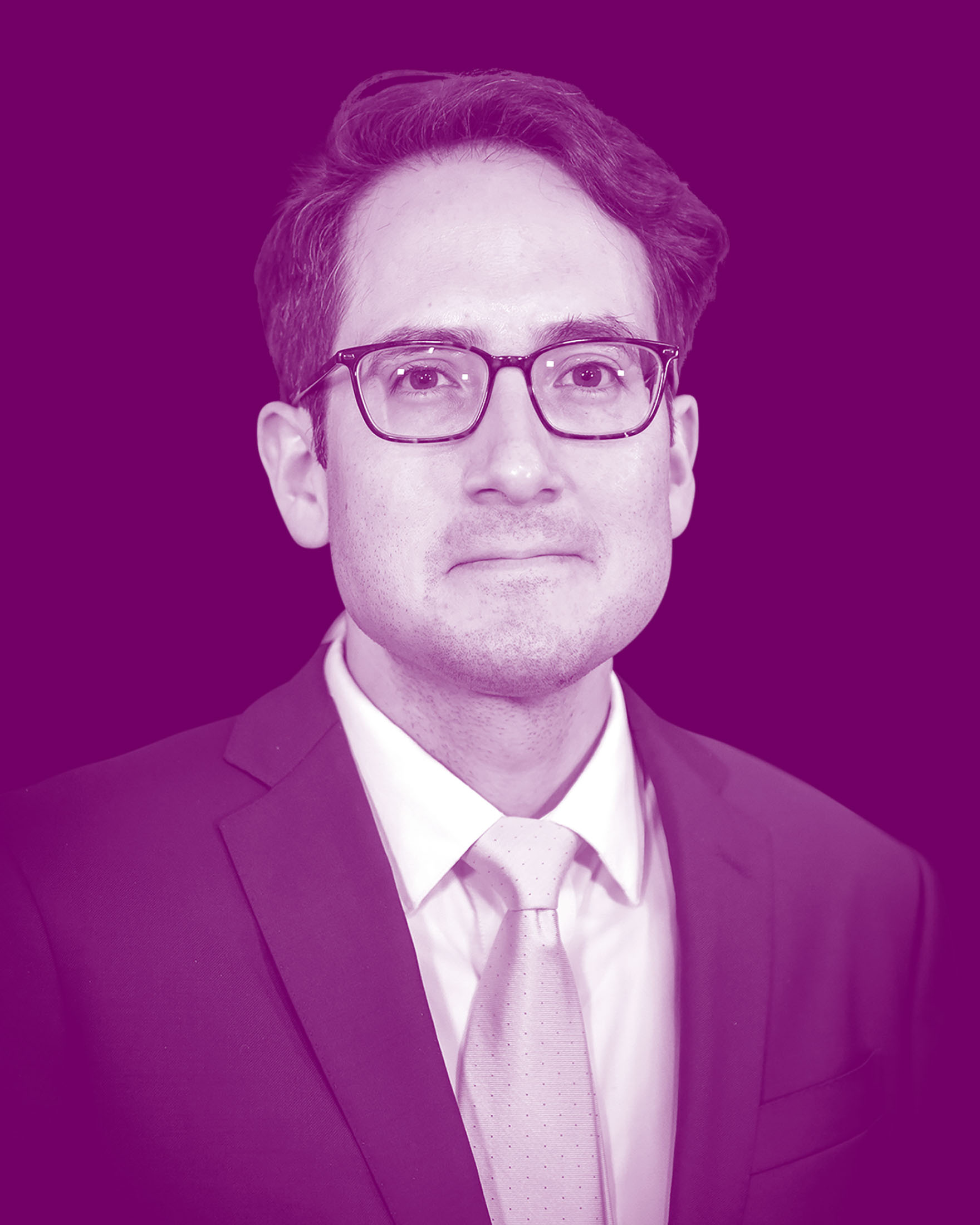
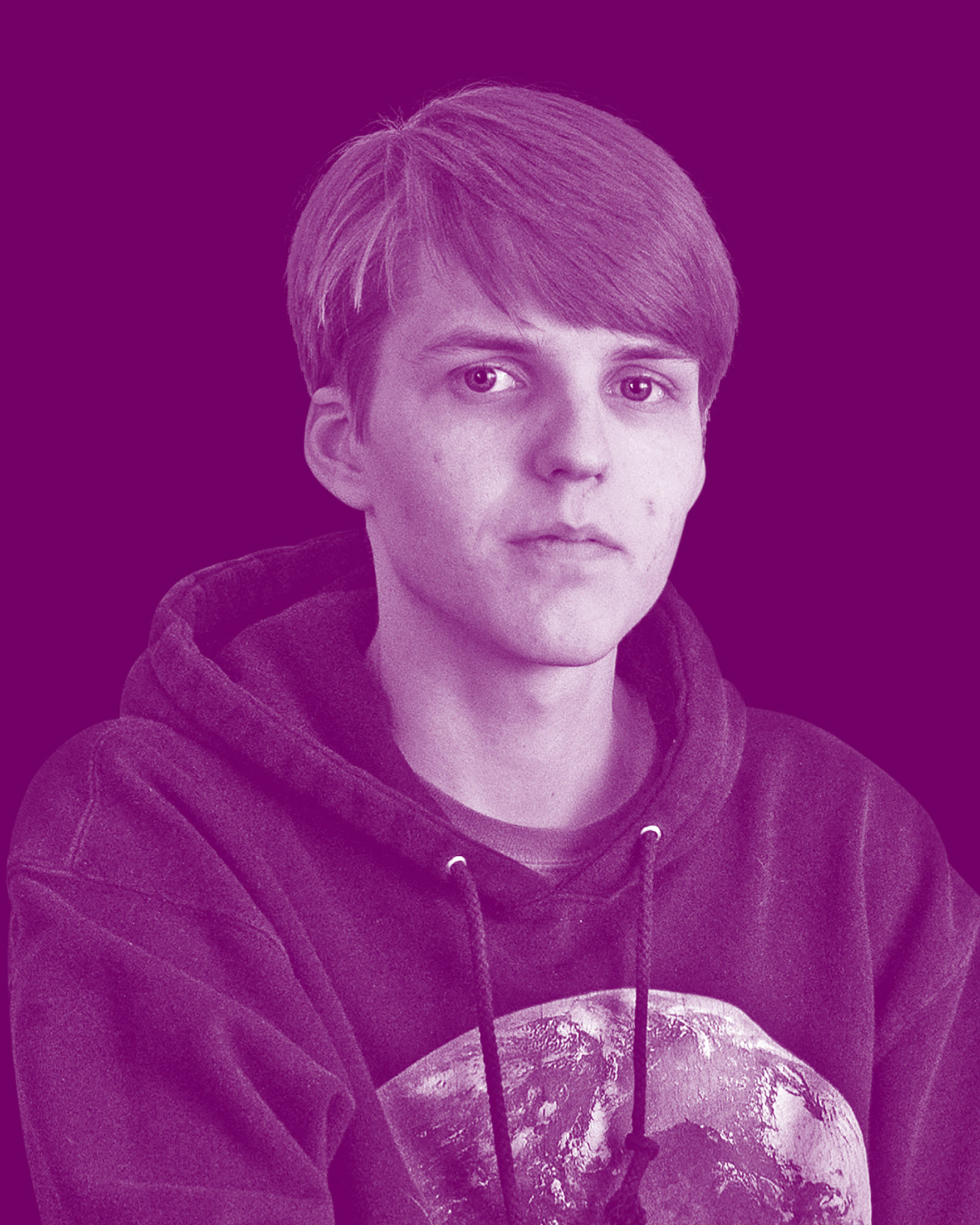
The technology industry is in the midst of a transformation that’s already leading to the emergence of a host of new names in the field. There are people building artificial intelligence from within the world’s biggest companies (Ahmad Al-Dahle) and at startups (Lin Qiao), those nurturing social networks on the rise (Jay Graber) and experts making sure everything is buttoned up in terms of security (Window Snyder) and the law (Rachel Proffitt). And, at a time of realignment between tech and Washington, it’s also worth watching who the Trump administration is bringing in (Luke Farritor) and trying to push out (Alvaro Bedoya).

Ahmad Al-Dahle

Ahmad Al-Dahle

VP for generative AI, Meta Platforms Inc.

As head of the most important artificial intelligence efforts at Meta, Al-Dahle has one of the tech industry’s most stressful jobs. He works closely with Mark Zuckerberg, and the Facebook founder has made it abundantly clear that he expects Meta’s AI products to lead the industry by the end of the year. That’s no small task considering the competition from the likes of Google, Microsoft and OpenAI.

Meta is dedicating tens of billions of dollars annually to develop large language models, generative AI features and an AI chatbot, which was just introduced as a standalone app. The latter, in particular, has become a major focus as Meta races toward 1 billion chatbot users. Zuckerberg calls personal AI assistants “one of the most important and valuable services” ever created. “I love that,” Al-Dahle says of his boss’s ambitions. “He wants to win, and I want to help us win.”

Al-Dahle joined Meta in 2020 after 16 years at Apple Inc., where he worked on, among other things, self-driving cars. Unlike the secretive projects he helmed in Cupertino, Meta’s AI push is open-source. If the rest of the world adopts its AI technology as a foundation, Zuckerberg says, the company will have greater control over the industry’s evolution. But even with the popularity of chatbots such as Meta AI and ChatGPT, Al-Dahle says, the industry is still “very much on the curve of adoption,” with the technology improving faster than people can figure out what to do with it. “It takes time,” he says, “for people to realize just how useful AI can be.” Kurt Wagner

Alvaro Bedoya

Alvaro Bedoya

Commissioner, Federal Trade Commission

Bedoya was at his daughter’s gymnastics class one afternoon in March when he got the message: President Donald Trump was seeking to fire him from his job as one of five members of the FTC. The attempted ouster breaks with 90 years of law barring the president from removing independent agency commissioners except for cause.

Bedoya, a Democrat, was appointed by President Joe Biden in 2022. His fellow commissioner, Rebecca Kelly Slaughter, a Democrat appointed by Trump in 2018 and reappointed by Biden last year, was also shown the door. Both are suing over their dismissal, setting up a constitutional battle on the extent of presidential power. A Trump win would eliminate the nonpartisan leadership found at independent agencies for the past century. “A world where an FTC commissioner can be fired for no reason at any time is a world where the Fed chair can be fired at any time for no reason,” says Bedoya, 43. His lawsuit is “about all these bedrock institutions that provide stability.”

The removal of Bedoya and Slaughter could weaken efforts to curb the power of tech giants, says Mike Davis, an advocate of antitrust legislation who’s advised Trump on the issue. “It requires a bipartisan coalition to take on these tech companies,” Davis says, because such litigation often takes years and must span administrations. Attempting to fire the Democrats on the FTC “was frankly a stupid move.”

Noting how tech bosses have cozied up to the administration, Bedoya says the dismissals risk opening the door to corruption. They create the “appearance that what is driving enforcement and regulatory decisions is Trump,” he says. “I am very worried about a world where the law and the facts matter a lot less than the size of a donation.” Leah Nylen

Luke Farritor

Luke Farritor

Software engineer, Department of Government Efficiency

Farritor gained his first measure of fame a year and a half ago when he used artificial intelligence to read Greek letters inside a charred, 2,000-year-old scroll. Then a college student, he was part of a team that won the grand prize in the Vesuvius Challenge, which invited technologists to detect ink on papyrus buried when the volcano erupted in A.D. 79, encasing the surrounding area in about 70 feet of hot ash.

A few months later, Farritor was named a 2024 Thiel Fellow, a program that encourages college students to drop out and pursue entrepreneurship, sponsored by venture capital superstar Peter Thiel. Late last year he joined Elon Musk’s DOGE team, becoming one of several college-age employees hacking away at the US government. Like many of his peers there, he already had a Musk connection, from two internships at SpaceX, which in a 2024 interview he called “definitely the best company in the world.”

Farritor grew up in Lincoln, Nebraska, was homeschooled and doesn’t drink alcohol, he said shortly after winning the Vesuvius competition. He started programming when he was 6, he told Bloomberg Businessweek in 2024, and applied his tech skills to projects as far-flung as wiring together 60 guitars for an art installation. Working at SpaceX, he realized that “the world is not efficient,” he said. “If you set a goal and you work really hard toward it, there’s a very high chance that you’ll just succeed, because no one else tried.”

Farritor, 23, has gone dark since joining DOGE. He stopped posting on X and declined interview requests. He’s been linked to a handful of different government agencies in recent months, pulling levers that are affecting America’s future rather than decoding the past. Ellen Huet

Jay Graber

Jay Graber

Chief executive officer, Bluesky

At a conference last year, Facebook founder Mark Zuckerberg wore a shirt emblazoned with the Latin phrase Aut Zuck aut nihil—“Zuck or nothing”—evidently comparing himself to a Roman emperor. The incident caught the eye of Graber, whose Bluesky platform is widely seen as an emerging rival to X and Meta’s Threads. A colleague soon made her a similar shirt with the message: Mundus sine caesaribus—“A world without Caesars.”

Graber, 34, runs the most disruptive social network to launch in the past five years, and she’s doing so in a way she hopes will differ greatly from the behemoths that have preceded it. Bluesky looks and feels a lot like X, with posts often heavily focused on news. But its technology is built on an open protocol similar to email, making it easier for users to personalize their feeds. They can, for instance, choose different content algorithms or interact with users from other networks using the same technology. Graber’s aim is an experience that’s not dominated by any single decision-maker. “There are these Caesars of the online world who have built empires with our data and our time and our attention,” she says. “People feel disempowered.”

She may be onto something. Bluesky’s userbase has more than tripled since September, to 36 million, fueled in part by an exodus from Elon Musk’s X. While Musk’s move toward the right has given Bluesky a whiff of leftiness, Graber says that’s not true, and it certainly isn’t her goal. “We want to make sure that we’re laying out the vision for what is to come,” she says. “A social web that’s in the hands of users.” Kurt Wagner

Sarah Guo

Sarah Guo

Founder, Conviction

Two years ago, Guo was one of the few women in the leadership ranks of venture capital firm Greylock Partners, where she invested in an array of software, computer security and crypto startups. She gave it up in 2022 to start her own VC house, Conviction, so she could focus on an emerging field that had captured her imagination: artificial intelligence. “I found it hard to work on anything except the technical changes I thought were going to be the most important in my lifetime,” she says.

Guo, 35, grew up in Wisconsin before moving to Massachusetts, where her parents started a wireless networking company, Casa Systems, that they took public in 2017. Before getting into venture capital, she founded a short-lived social network called Friendly whose rapid failure didn’t quench her entrepreneurial spirit.

She’s since become one of the most prominent angel investors in the AI sector. As companies such as OpenAI and Anthropic pull in billions of dollars from blue-chip backers like Microsoft Corp. and SoftBank Group, Conviction has raised a relatively modest $300 million and made targeted bets on promising newcomers, including Harvey AI (a service for law firms), Mistral AI (France’s open-source AI champion) and former Twitter Chairman Bret Taylor’s entrant, Sierra, which is developing autonomous customer service agents. At the same time, Guo co-hosts a popular podcast, No Priors, where she quizzes leading figures in the field to get to the heart of the dizzying advances and complex changes that are confounding even the insiders. “I am massively optimistic,” she says. “The abundance we can get for the average person, the access to intelligence, will vastly overwhelm the downsides.” Brad Stone

Rachel Proffitt

Rachel Proffitt

Chief executive officer, Cooley LLP

Founded in San Francisco more than a century ago, Cooley has long provided legal counsel to the Bay Area’s electronics industry, from early entrants such as Hewlett-Packard through the rise of the internet and smartphones. Since taking over as CEO last year, Proffitt says she’s focused on ensuring that the firm’s nearly 1,400 lawyers are ready for what she calls “the sun that’s blocking out everything”—artificial intelligence.

Under Proffitt, 46, Cooley last year was among the top law firms advising AI venture capital transactions, according to researcher PitchBook. It successfully defended OpenAI in a court challenge over consumer privacy. And Proffitt, Cooley’s first female CEO, is exploring ways to use AI to take over routine tasks at the firm such as billing and drafting simple legal documents.

Beyond AI, Proffitt is working with space technology and fintech businesses as they brace for increased regulation. And Cooley is representing law firm Jenner & Block in its challenge to President Donald Trump’s executive order seeking to cancel its government contracts and revoke its federal security clearances.

Even as Trump’s tariff wars rattle markets and damage the technology and life sciences sectors crucial to the firm’s growth, Proffitt is undeterred. Over the years, Cooley has helped companies including Nvidia, Genentech and Uber go public, and Proffitt sees continuing demand for corporate advisory services. “There’s still capital,” she says, “that needs to be deployed.” Malathi Nayak

Lin Qiao

Lin Qiao

Co-founder and chief executive officer, Fireworks AI

Lin Qiao was busy developing her own corner of the artificial intelligence business when the world started paying attention to AI with the 2022 launch of ChatGPT. Three months before the chatbot’s debut, Qiao co-founded Fireworks AI. The startup’s aim is to help companies adopt generative AI and harness multiple models to fit their particular needs—and run them as quickly as possible.

Qiao, 49, has worked at IBM’s Almaden research lab, LinkedIn and Meta, where she built the company’s AI infrastructure support and headed the development of an open-source software framework called PyTorch that’s used in many AI models. During her seven years at Meta, Qiao says she began to grasp the profound effect AI might have on businesses. She wanted to make it easy for companies to reap the benefits immediately and not after years of work by hundreds of engineers.

Fireworks has signed up companies ranging from Anysphere—maker of the popular AI coding assistant Cursor—to Uber, DoorDash and Verizon. As AI continues to evolve, Qiao sees plenty of opportunities to help companies manage the complexity of the technology and use it to solve all kinds of problems. “There’s no question the market is here,” she says. “I think we’re on a good trajectory, and there’s still a lot more to build.” Rachel Metz

Florian Seibel

Florian Seibel

Co-founder and chief executive officer, Quantum-Systems GmbH

Almost daily, Seibel reminds his 21,000 friends and followers on LinkedIn that #hardwareishard. He’d know. The former German army helicopter pilot and aeronautical engineer in 2015 co-founded a maker of reconnaissance drones, aiming to tap into his creative side after years in the military.

In the past decade, his company, Quantum Systems GmbH, backed by Peter Thiel, has grown to about 400 employees worldwide. Its unmanned aerial vehicles were first used primarily in low-stress fields such as agriculture and archaeology. But today, 90% of its sales go to the military sector, with the Munich company providing thousands of drones to Ukraine, where its AI features can keep the aircraft flying even when Russian jamming disrupts steering, navigation and communication. On May 6, British venture capital firm Balderton Capital led a €160 million ($181 million) financing round that valued Quantum at more than €1 billion. In April the company opened a 135,000-square-foot manufacturing facility in California to serve the growing US market. And it plans to double its staff in Ukraine to 200 to produce drones.

For the past three-plus years, Seibel has spent almost every moment pleading for Europe to deploy more autonomous weapons. Last year he founded a second company, Stark Defence (backed with €14 million from Sequoia Capital), which produces attack drones that can use AI to guide them to their target. But Seibel, 45, suggests he’s ready to ease up a bit. He has no official management role at Stark, and he says he’s considering a public listing for Quantum next year. “I’m going to buy the house I always wanted to have,” he says. “It’s time to settle down.” Gian Volpicelli

Window Snyder

Window Snyder

Founder and chief executive officer, Thistle Technologies Inc.

Since her days as a student in Boston in the 1990s, Snyder has been a dedicated member of the white-hat hacking community. That set her up for a quick rise through the tech world, and over the decades, she’s led teams building protections into phones, laptops, desktops and web browsers for Apple, Intel, Microsoft and Mozilla.

Now she wants to add that same level of security to your router, babycam and dishwasher. In 2020, Snyder founded Thistle Technologies, which she says will adapt the approach she used for big companies’ operating systems to the custom software powering the countless devices with internet connections. Companies worldwide are building connectivity into almost every gadget with a computer chip—75 billion and counting, according to researcher IHS Markit. But they frequently use variants of open-source code that are often wildly insecure. “I started to see this over time as pretty much the biggest problem in security,” Snyder says. “It’s a time warp: Looking inside these devices, it’s like the 1990s in there.”

Snyder, 49, says software flaws she and her peers long ago eradicated for computers and phones are increasingly common in connected devices: basic security mistakes such as leaving passwords and other secrets embedded and unencrypted, allowing hackers to mass-infect gadgets and use them as a staging area to launch additional attacks. Thistle makes software that helps manufacturers build in protections from the hardware up and provides a secure way of updating their products. “We’re hugely vulnerable,” she says. “There are so many things coming together right now making this a critical period for securing these devices.” Jordan Robertson

Chi Xu

Chi Xu

Founder and chief executive officer, Xreal Inc.

The biggest seller of augmented-reality glasses—a product that tech’s biggest powers have been pursuing for more than a decade—isn’t Apple, Google or Meta. Instead, the field is dominated by Xreal, a 500-employee company in Shanghai. Led by Xu, a veteran of augmented-reality pioneer Magic Leap Inc., the company makes the biggest hardware names look like laggards. Xreal sells hundreds of thousands of pairs of glasses a year, and it’s partnering with Google on Android XR, a new operating system for virtual-reality headsets and augmented-reality glasses. Xreal “can redefine how people experience the world,” says Xu, 41.

The company offers AR glasses—they have transparent lenses with screens that layer digital content over the real world—ranging from about $200 to $600 each. Xreal has created a chip for such devices, has its own factory for making visual technologies, and has partnered with Sony Group Corp. for the tiny screens and Bose Corp. for speakers. As soon as you connect the glasses to your phone with a standard cable, your apps and content pop up in front of you.

Apple, Meta and Google are all working on similar devices, but they likely won’t hit the market for several years. Xreal will be the largest manufacturer of true AR glasses when the new Android operating system arrives. (Samsung, which is also developing AR glasses, makes a virtual-reality headset that uses the XR operating system.) “We’ve stayed focused,” Xu says. “While others chase side projects, we know exactly what we’re building, and we’ve been relentless in making it real.” Mark Gurman

Photo illustration: 731; Photos: Courtesy subjects (8). Farritor: Shawn Brackbill. Guo: Ellian Raffoul

More On Bloomberg